


Produced water treatment, paired with the logistics to store and move water, gives produced water optionality. That idea ran through Episode 10 of The Water Exchange, where Rick McCurdy, vice president of innovation and sustainability at Select Water Solutions, sat down with Aaron Horn, vice president of infrastructure for New Mexico. Tune in as they trace produced water recycling from early shale projects to fracs that can run on 100% recycled water, and on to what’s next for the industry.
Key Takeaways
Logistics and Bacteria Control Make Produced Water Recycling Work
Produced water treatment for recycling follows a fairly standard routine: oxidize the water, remove solids, sometimes filter it, and send it to a pit. What sets a network apart is scale and connectivity, gathering water from many operators and moving it to wherever a frac is running. Once the water is in the pond, bacteria is the daily challenge, not salt. Polymer chemistry changed the game when friction reducers that work in salt water replaced guar gels, so salt no longer limits recycling.
Disposal Remains the Backstop
Recycling serves fracs, but the network still needs disposal so it can keep taking water without shutting in oil-producing wells. Studies suggest Permian disposal capacity could run short in the coming years, which makes alternatives to disposal a priority.
Produced Water Treatment for Beneficial Reuse Starts With Salt
When the industry looks to put produced water to work beyond frac recycling, salt becomes the real hurdle. Removing dissolved salt is a step change in cost, scope, and capital compared with controlling solids and bacteria.
Minerals, Cooling, and Power Widen the Optionality
Produced water can be more than a frac input. Select’s treatment and connected network let the same barrel serve a different operator’s frac across the basin, cooling for data centers and power generation, or mineral extraction, with disposal as the backstop. Demand is growing in places short on both power and fresh water, like Southeastern New Mexico, and Select is already working with lithium extraction companies and has entered an agreement with an iodine extraction company. Treatment is what keeps those options open.
When operators, neighbors, regulators, and communities see produced water as a resource rather than a waste, behavior follows. Press play on the full episode to hear how Rick and Aaron get into all of it, and find the full transcript below.
Full Transcript
This transcript has been lightly edited for readability.
Welcome everybody to the Water Exchange podcast. I’m Rick McCurdy, vice president of innovation and sustainability with Select Water Solutions. And I’m Aaron Horn, vice president of infrastructure for New Mexico for Select Water Solutions. Hey, Aaron. I’d like to kick off with… You and I have a history that go back somewhat. I first became aware of you when you were an engineer for Newfield, and y’all were doing some produced water treatment. I believe it was in the Woodford Shale And doing some surface discharge, which was allowed in Oklahoma per the Corporation Commission rules.
And you had written an SPE paper about that and I remember downloading and reading an SPE paper when I was at Chesapeake. So that would have been seventeen years ago. Seventeen years ago. Not long after that, the treatment company that we used on that project recruited me out of my cushy engineering position at the time. And I started working for a smaller company and helped them sell. And my very first sales pitch was to Rick McCurdy of Chesapeake and you frightened the hell out of me. I remember getting into the elevator with you and you’re so polite and nice and we went down the elevator into this big room and started giving my pitch and you politely started picking me apart.
This is how this is always gonna go. I’m in serious trouble. Well, it wasn’t mean spirited. Oh, no. No. No. I was… Just how it was, and I remember that. I remember that activity. That was fun. But, again, listen, that was enough reminiscing. Let’s talk about where we’re at today. And, obviously, you’re over in the Delaware Basin, right, over in Carlsbad? I am. And we… Let’s go ahead and do talk a little bit about history. We do that all the time, you know, when it comes to produced water treatment. You know, back when we were first getting going into business, I mean, it’s freshwater everywhere.
And much smaller fracs even with the unconventionals. You know, these were typically, you know, maybe three, 400,000 barrels tops. And, of course, the reuse really got underway up in the Marcellus just because the cost of having to dispose of water up there… Because they had to. But Newfield was one of the leaders, particularly in Oklahoma, in reusing produced water. You wanna talk about that a little bit? Gosh. Again, this was in 2009, 2007 to 2009. And so we had a shortage of surface groundwater In the area where we were fracking.
And we were fracking in Central Oklahoma, Woodford Shale, gas play, and we were just running out of water. Was there was no aquifer water there. So we had to find a way to find more water. So some folks said, hey, let’s try to use our produced water. And I mean, that was the beginning of my involvement in produced water recycling. At the time we would recycle maybe 10% of the frac volume would be produced water. And now our customers today, usually 95 plus percent, sometimes a 100% of their half million barrel fracs compared to our 100,000 barrel fracs in the Woodford in Central Oklahoma.
Half million barrel fracs, 100% recycled produced water. So that’s what nineteen years has evolved into. And of course, now you look at where we’re at today, you know, like I said, much smaller fracs back then. Now we’re typically on a single well somewhere in the neighborhood of three quarters of a million barrels per well on that. And then now we’ve got the advent of simul fracs. First, was zipper fracs, now simul fracs, now trimul fracs. How’s that affecting your business? So in two ways, it certainly impacts our planning, but it also gives us a competitive advantage because our strategy in New Mexico is to build a lot of storage, gather a lot of water into that storage, connect all of our storage together.
So we have about 26,000,000 barrels of storage in New Mexico right now. Across 30 something facilities, we have about a million and a half barrels per day of treatment capacity. So we’re bringing water in all over the place, and we have the ability to move that water to wherever the frac is. So the water coming in is coming in small quantities. Thousand barrels here, 2,000 barrels there. Sometimes you’ll get a 12 well pad that’ll kick off and you might see 60,000 barrels a day coming in, but it tapers off quickly.
So the water is distributed all over the place, and our job is to pull it together, treat it so we can store it, and we’ll talk more about that later. And then we’re able through our network of 16 inch, 20 inch lines connecting all of our pits, we’re able to move the water where it’s needed and support these huge, like as you said, two trimul-fracs, 600,000 barrels per day. At one point we were supporting two trimul-fracs, and this was in January, and four other fracs and we were pushing out 1,100,000 barrels per day.
And the logistics behind that takes a lot of guys working on my team that are a lot smarter than me to figure all that out. That… That’s absolutely amazing and so much different than where we were just ten years ago. So you think that’s… That is definitely the future of where we’re headed, particularly when it comes to produced water reuse, just more and more infrastructure, more pipe underground, more connectivity. I think our… The executive team at Select that had this vision of a recycle first approach was it was disrupting in the New Mexico market.
And we all know the challenges with disposal. You know you have a really strong knowledge about the technical challenges of disposal and I’d like to hear your opinions on it. But ultimately what it means is there’s a lot less disposal capacity in New Mexico for various reasons, but the water keeps coming. The water keeps coming and it keeps coming at greater volumes. So I think a business model like ours is a part of the solution. It’s not the entire solution, but it’s a part of the solution. And a part of the solution is to take as much water as possible, gather it, store it, and then send it where it needs to go for the fracs.
What you… That type of scale is what has made Select the leader in New Mexico for treatment and reuse. The actual treatment of the water itself has become sort of commoditized when you talk about treatment for reuse on fracs. Desalinating, that’s different. But treating for reuse for fracs is a fairly simple process and us and our competitors follow pretty much the same routine. We treat it with an oxidant. We send it through… Most folks use a dissolved air flotation system. We use gases to kinda carry all the solids up to the top, and then we scrape it off the top.
Sometimes we’ll filter it a little bit more after that and we send it to the pit. So that… There are some companies out there that can do that. What companies don’t have that Select has right now in New Mexico is a combination of things. Number one, our executive team has made this strategic move to invest heavily in that infrastructure in New Mexico that we have now. So we have all these huge diameter pipelines connecting 26,000,000 barrels of storage. That storage, that size enables us to do things with water reuse that other companies simply cannot at a scale that others cannot.
The reason we were able to get to that scale, that all that technology that we’re putting, rather all the capital we’re spending on infrastructure, we have to underwrite that somehow. We have to say, okay, we’re gonna spend this money, but we know we’re gonna make money. We know we’re gonna make a return on that capital because of these revenue projections. And the way to do that is we… You have to have relationships. So you have to have trusting relationships with operators that they’ll commit to you. We’re gonna send you our water and then we’re gonna trust you to treat it and store it and then send it where we need it for our fracs.
And that trusting relationship with a few core partners is how we started all this. We said to a few of our key customers that we’re gonna put in this infrastructure and it’s gonna allow you to recycle water. And that was a leap of faith for them. The leap of faith was can Select really do what it’s saying? Reach this scale, but also connect operators water. Yes. So we will take water from eight different operators in 12 different places and we’ll send every molecule of that water to a frac for an entirely separate operator that’s 20 miles away.
And we have to because we have to… There’s not enough water coming back in any one place To support a trimul-frac. You have to gather it together. You have to move it. In order to do all that, you have to treat it first to make sure the bacteria don’t take over. And then you move it to where it needs to be. And that’s what Select has done that others haven’t, and that’s built on our trusting relationships with our partners. And then a big bet that we’re gonna spend a lot of money putting this together. Our thesis is that this is going to work, now we’re three years into it, and it’s working.
I was fixing to say, I think you’ve proved that it does work. From pipe in the ground, let’s talk about how that’s evolved over time. It’s evolved a lot and it’s evolved very quickly just recently and I’d say since COVID. So since 2020 and beyond, the pipe sizes have just increased. So what we found is before we might put eight inch, 10 inch, 12 inch, we might even get really aggressive and put a 16 inch pipe in the ground thinking maybe someday we’ll make it economic because it’s expensive to put a 16 inch pipe into the ground.
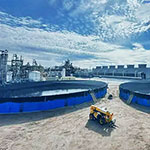
Now shift to today and Select has hundreds of miles of 16 inch pipe, hundreds of miles of 20 inch pipe. We’ve got dozens, maybe hundreds at this point of pipeline. And this is high density polyethylene pipe. It’s plastic pipe. Very thick wall plastic pipe. Very durable, very dependable. And we’re moving 100, 200, 300,000 barrels a day here and there to get the water where it needs to be. And that’s a huge change for our industry. Our business model of we’re going to put a lot of pits in the ground. We’re gonna build them right to make sure that they’re gonna hold the water the way we expect them to.
And then we’re gonna connect all of them with pipelines because we know that the fracs move and the fracs aren’t always near this one pit that we spent a million dollars building. That’s right. It’s gonna be down here 60 miles away. So we can literally today say that, for those familiar with New Mexico, we can send water from Arkansas Junction almost to Hobbs all the way down to White City where the caverns are, South of Carlsbad. We can move water from one corner of Lea County to the other corner of Eddy County. And that’s a huge change.
That is absolutely a huge change. That is quite a bit… Knowing New Mexico, that’s quite a bit of distance to move water across there. So when you have that kind of scale where you can take water from Arkansas Junction in New Mexico almost to Hobbs down to White City, which is south of Carlsbad. It’s a 60 mile straight line shot. If you follow the pipeline route, it’s probably closer to double that. So an important part of it of that infrastructure is that there needs to be a backstop. When the fracs slow down We gotta keep that water coming in.
And during those times, now we have a very, what I like to think, is a sophisticated process for balancing all of this water. And what we call balancing is mostly it’s moving water around to make sure that this pit doesn’t overflow and this pit has enough water in it to support this frac. And we move more water between our pits than either the water we bring in or the water we send out. We’re shuffling it all over the place all the time. And that’s a process we call balancing, which I have a very great staff in New Mexico that that run that process.
But to backstop that, when the fracs… When we just don’t have enough storage and there’s not enough frac activity going on to allow you to continue to bring that produced water in, so we’re not shutting in oil producing wells What you need is disposal. You’re absolutely correct. We’re doing everything in our power to move water as far and as quickly as we can to support as many hydraulic fracs we’re in, but frac schedules change. And this operator may have… We’re gonna do this one, this set here in October, and the next set’s in January.
And so you’ve gotta constantly find places for that water to go and just keep it on the move, but we do run-in the instances, every company does, to where there’s just not simply enough places to go for the water you have on hand, and we do need disposal as that back stop. But the disposal… Underground injection of saltwater is always gonna be a part of our… Of any company solution, wouldn’t you say? Absolutely. And absolutely. And we’re gonna talk some more about that here in a minute and particularly… And just so the folks are aware of stuff is, you know, Select is one of our largest areas operation is, of course, Permian Basin.
Though we are in many other basins within The US and operating. And a lot of people might know this, but for those of you that don’t, if you took that little bitty section of Southeast New Mexico and West Texas and you… We were to take it and make it its own nation, that becomes the fourth largest oil producing nation on Earth. So there’s a lot of interest on that and particularly the… What the… We believe the future is for disposal in that area. And we’ll get around to talking about that here in a minute and some of the things that are currently being done toward that end.
I’d also like to talk a little bit more. Obviously, the infrastructure is a big deal. But in the future, I think we’re gonna see a lot of opportunities where we need water coming both ways. We may treat it and send it out for a frac, but then again, we may also treat it and send it out for some other industrial use, whether it be a data center or natural gas power generation cooling or something like that. And then we may have the need, depending on where the rules end up landing, to bring the concentrate back from that cooling operation.
So Obviously, we’re pretty adept at putting pipe in the ground. We are. And what do you… Rick, what do you think about the concept that I’ve heard a lot of folks talk about and it makes a lot of sense of taking the advantages of economies of scale, gathering produced water like we do, and we have a… We are very good at gathering water together and managing it. We’re very good at putting pipe in the ground and moving water around. We’re good at treating water, technology agnostic, just depending We on what the end use don’t really sell technology.
We sell solutions, and we work with all of the water treatment technology providers to cobble together the right solution for any specific scenario. But what do you think about this idea of bringing say, let’s talk big scale here, let’s say 250,000 barrels a day To a location. We draw the fresh water off of it. Maybe we draw off, let’s just use round numbers, let’s say we draw off half of it. So we got now a 125,000 barrels per day of very nice clean fresh water that there are uses for that. You mentioned data centers.
We use it cool data centers. With data centers you’re balancing out energy or fresh water. That’s right. You’re going one way or the other. So if we can provide them fresh water, okay so you have that. Now this brine that’s left behind is concentrated. And since we have partnerships with mineral extraction companies, we’re moving very… We’re looking at a lot of different things. But right now it’s iodine and lithium. Lithium and iodine. So now you have this concentrated brine, their economics, our partners economics in mineral extraction are better.
Fresh water go into the to a use that’s gonna offset the use of critical freshwater resources in New Mexico that exist Absolutely. On the surface or in aquifers. And then we’ll take that water back, that concentrate after it’s been treated for mineral extraction, we’ll use it for fracs. So what do you see as the challenges to that vision being, you know… That that is where we’re headed eventually. There is such a demand for fresh water in Southeast New Mexico and West Texas. There always has been. I grew up just outside of Midland on a small farm, and we couldn’t drink our well water from our house.
We irrigated cotton and alfalfa with it, but we couldn’t drink it. But there will always be a need for that. And I… I’ve still got a brother and sister who live out there, and you go out there now and it’s just like anywhere else. You know, there’s reuse ponds set up everywhere, but there’s still a ton of groundwater being sold for fracs Just due to surface use agreements. The landowner owns the water underneath his land. So if you’re gonna operate on it, a lot times it’s gonna be right into the contract. You buy my water.
You gotta buy my water. That that is being addressed to some degree. I wanna step off for a minute and talk about… Currently, there’s a group called the National Petroleum Council. National Petroleum Council exist as a information source for the Department of Energy. And what… So what happens in a given scenario is the Department of Energy, the secretary or one of the two undersecretaries sends a note to the National Petroleum Council and says, I wanna know all there is to know about this. And that’s what the National Petroleum Council does.
They assemble a team. They start putting it together, and then they generate a report, and they send it back to the secretary or undersecretary. And that’s… One of those is currently underway right now focused on produced water. And I happen to be a task group lead on that and enjoying the experience very much. But a lot of that has to do with, centered around the concept of in the future, where could produced water be a hindrance to America’s energy dominance. So as you can imagine, the bull’s eyes on the Permian Basin for sure, but we’re looking at other basins as well.
That study is expected to be released to the DOE sometime in December of this year. So by sometime next year, we’ll be able to talk more about what ended up being in that report. At present, we don’t get into what we’re talking about in it or any specifics because I work what’s… I call the coordinating subcommittee, which are the worker bees. And then above that, we have the study committee, which is the CEO as a lot of the member companies. And, ultimately, we need their approval to say, yes. This report’s ready to go out.
I’m excited to see that. So, yeah, it’s a very worthy undertaking, and, hopefully, it’ll be very helpful for the Department of Energy. And we make… We’ll be making specific recommendations on how to address some of this. Now one of the things you mentioned earlier was disposal, particularly in the Permian. Now there is many… There’s independent studies have been done. I’ve seen studies done by some of the large operators in the Permian that indicate that somewhere, generally depending on which number you’re looking at, somewhere in the next three to say seven years, we’re gonna run out of disposal capacity in the Permian Basin.
Now when that happens, you essentially have one option. Start shutting in wells because you don’t have anywhere to go with water. Now, obviously, it’ll be some of the older unconventionals that are… Tend to be more water and less oil that’ll get shut in first, but we’re gonna try to avoid that at all possible. Now when we start talking about avoiding that, we’re talking about all options are on the table. First of all, we’re still gonna need disposal. We’re not gonna get away from that. But how do we best manage the current disposal that we have?
I think what what’s… What most of the, I think, general public doesn’t know is the connection between our energy independence as a nation And the management of wastewater resources. Absolutely correct. So our industry has a remarkable way of adapting and coming up with solutions. Creating solutions that five years before that no one even thought would exist. And we find ways, horizontal drilling, treating water and reusing it. We come up with amazing technology as an industry, some of the smartest people in the world.
And I have confidence in our ability to meet that that delta between what produced water is gonna be produced to give us the oil production to balance geopolitics worldwide. We have to come up with a way of managing that. And as you said, disposal has to be a part of it. It will always be a part of it. Recycling for reuse on fracs, which is what my team does, will always be a huge part of it as long as the fracs are ongoing. But we have to figure out what happens when the fracs stop in an area because eventually you drill up all the rock, you frac all the rock, and you’ve gotten the most that you can out of that area from a geographic perspective, at least for a little while.
And then what happens? Then what happens? Well… And I say this all the time. You know, when I talk about these studies, say, three to seven years, if we lost… If we shut down frac tomorrow, we don’t have enough plate. We don’t have room to go with the water we have now. Without fracs pulling that up, I believe the number of… On average, about six to 7,000,000 barrels a day are going to frac. We don’t have that room in our current disposal wells. So the fracs have to keep going. If they stop, whether we run out of rock to drill or heaven forbid we have another downturn, the oil dips down into the thirties and all of a sudden we start shutting completion crews down, then we got a problem.
Not only we’ll lose the… All the new production, the initial production from the new wells because they won’t be fracking. But we’ll also have to shut in some of the older wells because we don’t have anything to do with the produced fluid. So what do you think that solution suite looks like, let’s say five, ten years from now? I know Select is investing incredible time and money into putting this. We wanna be a part of this. We wanna be a part of solving this huge problem that impacts our energy independence as a country.
Something that I’m very passionate about having served in Iraq for, you know, what you could argue was about oil prices one way or another, at least it was related. What do you think that’s… That solution suite is going to look like beyond what we are… We’re already doing now? Like, what are the things that are gonna emerge? Now we’re getting into stuff that I’m very excited to talk about. And, you know, one of the things that we do wanna mention that, you know, obviously, everybody out there today, if you’re going to the pump, particularly if you have a diesel truck like I do and you go to the pump, you’re just like, holy cow.
$6 a gallon where I’m at, where I live. And, if America hadn’t got to this point of energy dominance and self sufficiency with energy, there’s no telling where the price of gas would be today with the Strait of Hormuz basically shut down. So thank goodness we’ve got the men and women out in the oil field that are drilling wells and completing wells and moving water and keeping things going, or else we might be looking at $8 to $10 a gallon diesel. And when you get into the numbers like that, then you start running into all these other issues like trucking starts shutting down.
That cripples the economy. Not that that’s my expertise, but it’s just common sense. If diesel prices go up to 8 or $10 That’s right. A gallon, you’re gonna have less diesel use. That means transportation being crippled. Well, so let’s talk about some of the other possibilities out there and what Select’s doing around that. And first of all, let me say, that’s a large part or at least a very good part of what I do. Very fortunate to do it in conjunction with two good friends, Nate Bonda, who was on our earlier podcast with me, and doctor Jin Hu.
And we kinda formed the, basically, the triad of evaluating… As you said, we’re technology agnostic. So if we hear of somebody that’s got a technology, we invite them to come in to talk to us, and let’s take a look at it. We’ve run a lot of pilots. And just so you know, my… I haven’t changed my spots. If they’ve got a faulty premise, I start peeling it apart. And some do. Especially in desal. So we’ve taken a look at a lot of different technologies, piloted one very successfully this past year over in the Midland Basin, just North of Midland.
We treated water that was roughly about a 120, 130,000 milligrams per liter of total dissolved solids. We produced a clean, polished distillate that was roughly 200 milligrams per liter of total dissolved solids. And we ran a irrigation pilot last year in conjunction with our operator partner and with the Texas Tech University and the Texas produced water consortium. They came down, and we set up plots, and we took five different crops, and we ended up with a total of a 120 plots. Each plot, one meter by five meters, with each plot containing a one by one square of a individual crop.
Cotton, sorghum, native grass, a grass seed that was native to the Permian back about a hundred and fifty years ago, and then a plant called, guayule. And guayule is a plant grown predominantly down, it’s a… Likes a air… Or warm climates was done a lot in, Mexico In that area. It produces a latex rubber in its structure that you can harvest out of it. Alright. And, anyway, we did that. We had a 120 plots. A third of them were irrigated with our, polished distillate. A third were irrigated with groundwater from the ranch, which, by the way, was 2,500 milligrams per liter total dissolved.
And then a third of them only got natural precipitation. We got a late start last year, but we still saw some very promising results out of it. Obviously, we would have… You know, typically, sorghum will get up a little above waist high, putting on heads and stuff like that. And we started late. We saw it about you know, most of the plants about two foot off the ground. Where it was only received natural irrigate… Natural precipitation, no growth. It just didn’t rain enough. And the same way with the grasses. Grasses flourished where we were watering them, where it got natural precipitation.
Just brown grass like we’re used to seeing. How did our irrigated crops perform against the crops irrigated with local water, a little bit higher TD… TDS water? Performed very well. As you can imagine, we did several different studies with this and in conjunction with the consortium and with Texas Tech University. You know, a lot of people… There’s a lot of concern out there by people about how do you know you got this water clean enough. We had it analyzed through a third party NELAP, National Environmental Lab Accreditation Program lab.
So we hired… We had them send out a professional sampler to make sure all the samples were caught right, went back to their lab to follow all the standard testing protocols, whether they’re your EPA procedure or ASTM procedure, And we tested for over close to 700 different analytes in that water. Everything looked much better. The… At the end of the day, we had a handful that couldn’t be fully identified, but they didn’t have a structure in them that would indicate they were toxic. But it… The same number that was in City of Midland water.
So we were very confident it was doing good. Now what Tech has done is they have taken the plants back, and they’ve looked at the cell structure in the plant. No difference in the cell structure between irrigated with either groundwater or our water. None of that. The plants were… Is healthy on either side. We did see a little better growth out of the sorghum with the groundwater, so, evidently, it prefers a salt. It was a breed… A type of sorghum that prefers a saltier water, which isn’t uncommon. Because over time in the Permian, the plants that you are available, the seeds are available to you have been migrated to deal with the type of water you’re gonna irrigate it with.
That’s alfalfa. We didn’t use alfalfa, but alfalfa is one that obviously, you know, a ton of it’s grown out in Arizona. And we grew alfalfa when I was a kid, but there’s different strains of alfalfa. Some like really fresh water, some like a saltier water. And in West Texas, it’s pretty much what we grew was a saltier. Well, I could speak a little bit to the operation side of ensuring that we only put water on the ground If that’s where we end up going. That it’s gonna be beneficial. Beneficial Right? Can speak to the operations of that.
I’ve had some experience with it over the years, distilling water, putting water through membranes. I’ve had the privilege of working with a lot of smart people who have done projects in, especially in the Marcellus you and Nate talked about. Pennsylvania, in Colorado Rockies area. And also in Arkansas when the Fayetteville Shale was going, there was a little desal project out there. So from an operational standpoint, what we would do is we’re not treating the water and sending it right into a ditch. Now that’s all theoretical at this point because this isn’t done on a commercial level in the Midland Basin.
But we’re not gonna just treat the water and send it right down a pipeline into the river or to irrigate crop crops or to a data center. What we’re gonna do is we’re gonna build a million barrel pit. And we’re gonna treat water and we’re gonna treat water into this pit. And we’re gonna let it build up. We’re gonna let it homogenize, and we’re gonna test that water. That’s right. And we’re gonna test it from the exact spot where we’re gonna pull out of it with a pump and put… And send it wherever it’s gonna go for its fresh water purpose, and that gives us some certainty.
Because we’re not gonna let that water out if it’s not meeting the stage. That’s right. And that’s one of the issues we talk about today is that when it comes to, beneficial reuse, particularly, if we talk, direct discharge, which there… We are one of the six companies or one of the five companies that have applied for permits through the Texas Commission on Environmental Quality for a discharge. Five of the… There are six permits currently in the queue. Five of them are for the, Pecos River Watershed, and one of them is actually a operator that plans to discharge South of Midland I see.
Into a creek bed. But you’re absolutely right. Without the ability, which we do not have right now, without the ability to do continual monitoring for a lot of these things. And we have… Not only that, generally, the Texas Commission on Environmental Quality, they require what’s referred to as whole effluent toxicity testing, particularly if you’re going into a waterway. And what this does is it’s a standardized test to where you expose different kinds of fish embryos and fish to the water you’re intend to inject, and they watch them for twenty four, forty eight hours.
And they… There’s short term test and a longer seven day test, and a certain percentage have to survive or else you can’t release that water. You mentioned the, distillation project years ago up in the, Fayetteville Shale, and that’s exactly what that… But it’s much smaller volumes. That’s what that operator did. They built two, I believe they were 40,000 barrel, ASTs. They would fill one up and then start filling the other one up. They would test it, go do the seven day whole effluent toxicity test. And by that…
Before this other one filled up, then they get the approval on that, and they’d open the valve and let it go into the White River. So that… That’s what we’ll have to do initially upfront, but that is referred to as stream bed augmentation. And there’s, you know, obviously, TCEQ studying this. I have not officially released the permits yet. However, they are actively working with applicants on language in the permit because this is something relatively new to them, the dis… Discharge of a treated produced water, as well as it was in September of this last year that the legislature had given TCEQ authority for land application for tree to produced water.
And previously to that, the pilot we did was authorized by the Railroad Commission. They had authorized it, and then after that, the legislature said, no. Let’s keep all this stuff in one basket, and so we’re gonna change that over to TCEQ. The operator we’re working with currently has an application in through TCEQ. That protects the Commission on Environmental Quality for surface discharge. The way rules work by sending that application in prior to the one we had expiring, then the current permit on the Railroad Commission remains in compliance until some point in the future when TCEQ either approves or disapproves application.
So does that… You think that process will expedite our journey down this path to beneficial reuse in some way? Is that… Do you see that as… It’s definitely helping because it gives us concrete proof that we can do this without environmental damage. We can do this without harm to a plant if we’re gonna irrigate with it. Obviously, the… Just having this water and being able to analyze it. And not only is the Texas produced water consortium helped us with this tremendously, and we had it analyzed. We’ve also sent samples of this water.
We allowed the New Mexico produced water research consortium to come over and gather up their own set of samples, and they went back in and researched it. In addition to the field irrigation study we’ve done, we shipped, treated water up to Texas Tech. They’ve done greenhouse studies up there, and there’s just numerous peer reviewed papers being currently put out or have been put out surrounding this study and the work being done with these plants. So we’re getting a lot of good information out there about the ability to do this safely.
And with no harm to the environment whatsoever. And that’s fantastic because we’re doing this in an area that desperately needs a new water source. Obviously, we’re doing a lot of work around this beneficial reuse concept, but more than just irrigation, potential irrigation and discharge into a waterway or a discharge into a riverbed. And there’s a lot of interest in that, particularly in the Permian. And then you kinda touched on some things earlier, and we’re also actively involved with that because we have a lot of data centers coming in and very interested in the area.
And as you mentioned, data centers have two options. They can cool with water. It takes a lot less power, but it takes a tremendous amount of water. Or are they cooled other ways that take a tremendous amount more power but use a lot less water? And I can speak to Southeastern New Mexico is being short on both right now. We’re short on power and we’re short on fresh water. That’s one of the reason and so is Texas. You know, governor Abbott recently put a moratorium on power generation and data center applications because applications currently in the queue account for…
If they were all built today, it would be five times the maximum capacity of the ERCOT grid in Texas. So, yeah, we had a power shortage for what they’re wanting to do. Data centers have that option. Natural gas combined cycle power generation, not so much. That’s still a pretty good consumer of water for cooling. There are some modern… More modern techniques that are starting to come out that might require a little less water, but that’s still a pretty healthy demand. And that’s the direction that most everybody is going to power these data centers.
Since the grid’s not there and the power’s not there, they’re gonna come in and generate their own. We’re actively working on that, along with some other applications we’re looking at for industrial uses as well. The question is there… And we’ll end this part of the conversation with it. The question is there is that there’s still a gray area about if we hand this water over to them for that application, what happens to it when they’re done with it? You know, it’s… A cooling tower is gonna circulate it seven times and they’re gonna concentrate it up a little bit.
Ideally, we’d like to take that back. And we just work it in for fracs. Fracs. That’s right. Let’s kinda go back a little his… A little bit of history on that. We started out with this conversation with talking about, you know, back when the unconventional world was getting underway. You know, it started out in the Barnett Shale, and everything was freshwater. Freshwater. Freshwater so much to the point that… And at the time, I was with Chesapeake, and we were a very active player in the Barnett. But a lot of our acreage was centered around Fort Worth and the, DFW and in that area.
And in that area and being in a municipal environment, you had a couple opportunities there. You could either pull water out of the Trinity River or you could buy water from municipalities. And municipalities were more than happy to sell you water. I… You’re in an urban environment, so you would literally run… Go out there with the… We didn’t have lay flat back in, the aluminum pipe, and you would pound a fire hydrant. And that’s how you would feed the fracs from a fire hydrant. To that end, again, when we let off the conversation, I talked about first being where you when you were in Newfield in the surface discharge treatment, surface discharge you were doing over in the Woodford Shale.
Let’s go back and give us a little bit of insight into what that involved. So at Newfield, we had a lot of water from our flowback and produced water from our wells. And we were trying to come up with a way to reuse this water in a beneficial way. And so at the time we were experimenting with reverse osmosis membranes. And we could only treat the flowback because the total dissolved solids would get too high too fast. And we had problems at the time, remember boron was slipping through the membrane. So we had to figure out a way to get boron out of it.
One of the things I would circle back to when we talk about desal is that we can take anything out of water. I’m an old water treatment hand, I’ve been doing it for nearly two decades. We can remove anything from water. It’s just a matter of what’s the right application and do the economics support it. That’s right. So in the early days of using water for fracs, reusing produced water for fracs, we started with this assumption that it must be fresh. And then the probably the biggest evolution in reusing produced water or fracs was, as we do, the industry evolved its frac chemistry away from a freshwater base, to a saltwater medium.
And the industry figured out a way to do all the things that it needed to accomplish downhole on a frac with saltwater. Now we’re in business. Because now instead of spending a dollar 50 or $2 a barrel to turn it into fresh, and back then it was probably $3.50 A barrel because we weren’t that great at it yet. Now we, you know, we could talk about the evolution of that. Just reusing salt water and how that’s evolved. Ten years ago, it cost companies that I worked for five times what it costs now to treat water just for reuse for fracs.
So the thing to know about produced water in terms of its reuse by the industry for completing wells with a process we call hydraulic fracturing is you don’t have to do a lot to it to send it back down into the reservoir. You don’t have to do a lot to it. The main thing that we’re doing is fighting bacteria. The salt doesn’t hurt us. We figured out a way to work around the salt. We’ll send the salt back down into the formation. But the bacteria is the challenge, and we have 26,000,000 barrels in storage. Our… My team’s number one enemy isn’t our competitors, it’s bacteria.
Because if you don’t remove the dirt from the water Just good old fashioned dirt. Silica, clay, it comes back with the produced water. If you don’t remove that, then it provides a haven For bacteria to grow in these very large pits. Because the solids will settle to the bottom, the bacteria hides in there, it floats in the water, the bacteria literally hides behind the solids in the water to hide… You know, to get in the shade from the UV rays so it doesn’t kill them. And so that’s what we focus on with our treatment process today, very streamlined version of what it was ten years ago.
We treat for bacteria and we remove suspended solids and we remove dissolved iron because it can impact the frac chemistry a bit. When you oxidize the water with the chemicals we use, we’re using stuff that people use in their homes. Bleach, hydrogen peroxide. Stuff that once it does its work, it just kind of turns into very benign products, oxygen products, hydrogen products. So we treat it with an oxidant, we remove the solids from the water, so what you’ve got is a very crisp, clean looking, very salty water you wouldn’t wanna drink, but you can use for fracs.
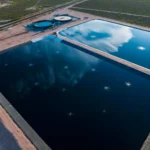
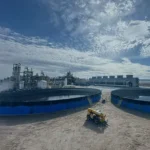
So we put this very salty water that looks like at this point now you’ve got a 500,000 barrel to 1,000,000 barrel pond that we put it into and it looks like a lagoon. Looks like it should be at, you know, in Tahiti or something. Water is blue and green and crisp, but if we don’t remove those suspended solids from the water first, it can turn black. And you could probably, you know… Talk about what happens to water when the bacteria thrive and especially how that’s important to the frac process. So the… You know, you did a very good job of describing that and you’re absolutely correct.
You know, that oxidation, that drives a number up that we constantly monitor called oxidation reduction potential, ORP. And generally speaking, as long as you have a sufficiently high ORP, it’s non conducive to bacteria growing. While we may go out to these surface impoundment, these ponds with an ORP typically in the 300 plus range, if you don’t do anything to that water with it sitting there, it just slowly abates away. Just degrades. Degrades and goes away. So to put that in perspective, this drinking water probably has about 1,600, 1,200 millivolts Of oxidation reduction potential.
We can’t even get produced water that high because of all the reactions that start happening. But we can get it up to about three hundred and fifty coming out of our treatment process. So the important part about that is we’ve zapped it as much as we can zap it and then we throw it into the pits and then… And so then we have a couple options. Many of our surface impoundments are set up with aerators and them to where we can constantly aerate. So as long as we’re aerating that water sufficiently, what that’s trying to do is keep that water from going into what we call an anaerobic or septic state.
If it goes into a septic state, then we’re encouraging anaerobic bacteria to grow. The most common anaerobic bacteria we face in the oil field is sulfate reducing bacteria. Sulfate reducing bacteria, as they begin to grow, they will… Any amount of iron… Even though we do an excellent job of removing iron from the water, we still typically have a KPI of, like, you can have up to ten milligrams per liter. The sulfate reducing bacteria will utilize that and convert that over to iron sulfide which is black and that’s why that water becomes black.
And they also produce hydrogen sulfide as a byproduct. Thus, it becomes black and it becomes very stinky. That’s right. That’s right. It does. And we wanna be good neighbors, and having ponds that smell like rotten eggs is not being a good neighbor. That is correct. So, therefore, we do spend a lot of time. I mentioned you can aerate the ponds. You know, one of the things we’ve seen, and particularly if you’re working in the Permian Basin, you’re gonna see dust storms periodically. Dust storm sweeps across a pond.
Now all of sudden, you got bacteria flourishing because, like you said, sand gets dropped into that pond. There’s bacteria riding on those sand grains, and here we go. So a lot of times, maybe our aeration can’t handle those fluctuations, but we have the ability… Many of our aerators are set up to wear out. We can go force fire side down them. Or an oxidizer down That was an important evolution of our systems. Our pond management, we inject a ton of air. We’ve just learned the more aeration the better. It’s an important investment.
It has the added benefit that we’ve learned of keeping whatever suspended solids are left over, a lot of times it’s blow sand that comes in later after we’ve treated the water. It keeps it floating in the water. Now this is a little trick to the trade. It keeps it floating in the water. If it’s floating in the water, it’s not settling down to the bottom of the pit. It settles to the bottom of the pit. All of a sudden, you have a bacteria haven. Sulfate reducing bacteria, the dreaded H2S gas that they produce. So with aeration, we keep the solids floating in the water, and it keeps our ponds from getting filled with silt and sand.
And it… So this is a good… That makes for a good transition point, talking about this sand floating in water. So we’ll talk… Let’s talk a little bit about how frac fluid chemistry itself has changed a little bit over the years. And one of the reasons that has been very beneficial, it is it allowed us to migrate into these larger volumes of produced water reuse. Again, going back to what we’ve been talking about when it all started these unconventional freshwater. So everything was geared toward freshwater. Then we started finding some products that worked with some blend of saltwater put in it.
Now typically in a unconventional frac, these are all made possible due to high rate, high volume hydraulic fracturing. So you’re typically… And this hasn’t evolved much. It’s always been a 100 barrels per minute, a 100 to a 120 barrels per minute. So a very high rate going downhole. The challenge has always been we also add proppant into that water. We add a sand into it to where when we create… These fractures are created downhole, when we quit pumping, they won’t slam shut. So we put a proppant up in there to brace them open.
The challenge has been how do you keep this sand fully suspended in this water till you get it out into the formation. And we do that through what’s commonly referred to as a slickwater frac, but it’s basically a polyacrylamide that’s essentially running with the water. It’s helping it maintain that rate, but then they’ve been able to… We’ve been able to orchestrate the chemistry of those polyacrylamides to where they can carry some amount of sand. As this evolution has taken place over time with produced water reuse, initially, a lot of our older fracs used to be completed with gel Or Not…
You know, guar gel. Guar gel. Sometimes cross linked with a bore… A boron compound. Guar did not Work with saltwater at all. So you started seeing a hybrid frac to where the front end of it might be a slickwater, and then toward the tail end of the frac, you switched over to freshwater, a slickwater using a mix of produced water. And toward the tail end, you switch over to frail… Freshwater where you could put guar in it builds more viscosity. And instead of using viscosity, the thickness of the fluid to hold the sand, now we transition to velocity.
That’s right. We’re just sweeping it along the pipe with the velocity, sheer velocity of the water. But when that velocity goes up, the pressure goes up and the friction reducer, which if you’ve never seen it before, looks like it looks like snot sort of. But it’s a very common material used in a lot of household goods and our ability to build a salt water matrix, or sorry, a friction reducer, these polyacrylamide friction reducers around a salt water matrix and make them function in a salt water matrix was the key to reuse of water in hydraulic fracturing.
That’s right. So we had friction reducers, then we developed high viscosity friction reducers, HVFRs. They were able to carry they were able to provide more viscosity to the water to carry a heavier quantity of proppant going in. That advent is what eventually let guar to just basically stop being used in unconventional wells. When we did that, now the door is wide open to where we have the chemistry that particularly we’ve seen in the Permian. We fracked wells with a 100% produced water all the time. All the time.
Every day. All… Every day. Every single one of our customers, you know, they… Fresh water is still important, but for smaller jobs now. We use fresh water to test a line when we’re about to use it to move salt water. So we test it with fresh, so in case there’s a leak, the leak is fresh water and it’s not gonna damage the environment. And there’s some parts of the drilling process that still require fresh water. But on the… If you take the life of a well and all of the water we use to complete that well and manage that well and you look at the percentage of fresh water used, I don’t know the number off the top of my head, but I know with our customers, are a huge chunk of the Permian Basin, it’s gotta be 90 plus percent now is hot water.
Particularly over an area you’re operating is… I have seen the numbers and I think, in New Mexico right now, at best, freshwater makes up 7% of completions, and that’s just some particular applications. In the Midland side of the Permian Basin, I think we’re closer to about 20 to 30% freshwater and again that’s due to those surface use agreements. And I think in both of those basins, that’s three, four, five times better in terms of our reuse of saltwater than it was ten years ago. Oh, absolutely. So another way to say that is our freshwater use has gone down by factors as our use of produced water has gone up.
Well, and I made the statement about needing completions in order to be able to continue to operate. If we did not have the ability to use saltwater and use… Produce water in these fracs, we would not be having the level of activity we are now because we simply Don’t have a water. Out in West Texas and Southeast New Mexico, you do not have the water, freshwater available to maintain the level of activity that we have going. Nor would we have… There’d be a certain amount of produced water produced from those wells that we wouldn’t be…
We wouldn’t have anything to do with at this point because we’re constrained on disposal capacity. And you’re right. There are certain things that you wanna do with freshwater. The regulatory authorities aren’t very happy. They do not want you drilling through surface drilling and going through the groundwater offer with a saltwater mud. So, typically, we use fresh water for that to… We get the surface casing set and get that fresh… That groundwater covered and protected. And then, of course, after that, there are things in drilling that we can do.
We… We’ve done it in my past life. We’ve used produced water in some drilling operations or some things you can’t. Another benefit, and not going back to the discussion, but if we do get down to where we start seeing generation more and more of this highly treated produced water, this… What this distillate, it could be used for those applications as opposed to using groundwater. I think the big thing for folks to understand with the treatment of water, the big shift and step change in treatment is when you go from doing what we do with recycling water for fracs, which is we remove stuff that’s fairly easy to remove.
From a technical perspective, it’s not difficult treatment. Logistics are more or more difficult than the actual technical treatment is. But when you start to remove salt from the water, when you start to remove dissolved solids, which we’re referring to as salt, that’s when there’s a step change in treatment. There’s a step change in cost, in scope, size of the treatment, in capital expenditure. You go from $5.10 cents a barrel of treatment, maybe $15.20 cents a barrel of treatment to an order of magnitude more. And that step is where we have to get to.
We have to make that economically acceptable for some combination of the D South campuses we talked about earlier about concentrating a portion of the water you’re bringing in with all of the salt, leaving behind a fresh water solution. We have to do all of that in order to make the economics work. We have to draw revenue, draw streams of revenue and value off of that chain wherever we can. But that’s the most important thing is that step change of treatment. Huge. You know, we talked earlier, Rick, about the evolution of friction reducers.
There’s another really important evolution that’s happening right now with chemistry and I know it’s something that if it involves chemistry, know you’ll able to talk about it, but surfactants are becoming more important now. Can you explain to us why Absolutely. And So let me give a little basic background on that to start with. A lot of people don’t under… Don’t know or are not fully aware, but unconventional shale reservoirs, generally, at best, you’re gonna be able to produce the numbers between 8 to 12% of the original oil in place.
That means once that well’s played out and uneconomical, 90% of that oil is still down in that shale. And we’re constantly trying to figure out a way how do we improve that number. How does that number compare to a traditional well, a conventional well, you’ll produce 30% of the original oil in place from primary production, then that’s where the water floods came in. Because water floods could typically get you another twenty five to 30%, and then you would leave 30% in the ground. So that… It’s much lower than that.
We know that we’ve never been able to successfully waterflood a shale. There’s been a couple of times that have been tried in the past because it’s just not conducive to pushing water through it. So there’s a couple other ways that that you could potentially produce more out of these. One of them is by injecting CO2 into the shale. That’s been experimented with in a few different areas. And the other one is by putting a surfactant into your frac package. Shale reservoirs, by and large, are what’s called an all wet rock.
All wet rocks do not wanna freely release the oil from them. They wanna hold on to it. That’s right. The surfactant goes in and migrates between the oil and the rock and changes the shale to a water wet environment. Water wet environment allows more of the oil to come back. That’s been shown. We’ve done testing in the past that demonstrate this. We’re actively… We… We’ve got one of the best setups in our R&D center here in Houston for testing that concept. I’ve done it back in my previous life with an operator, and it was a very tedious process because you were working with core plugs.
And, typically, in a core plug, what you’re trying to do is monitor… You know, you sweep through it. You’re trying to see how much oil you can get out of it, how much it releases. But you may have this plug, this little one inch by three inch plug. You may have it under thousands of pounds of pressure and heated the temperature, and it take you a week to two weeks to get one volume of fluid through that. Expensive process. And No matter how hard you try… And the operator I worked for at the time had the most extensive core library, of any operator in the business.
And no matter how hard they try to go in and cut these plugs out of those cores, you could be six inches different and the rock not be identical. So you have to cut out these core… These plugs and you couldn’t guarantee that the results from one adequately matched apple to apple the results from the other because a rock could be just slightly We have a process called microfluidics where we’re able to, laser engrave these little tiny little chips. And we can make them any kind of permeability that we want. We can replicate what’s in the fracture pack, what’s frac pack, the proppant pack.
We can replicate the reservoir. We can flood this with oil. We can sweep water through it. We can flood it with different chemistries, and each one is identical to the next. So it does give us an apple to apple comparison between these different surfactants when we’re looking at them in this reservoir and allow us to pick the best one for that particular application. So we’re creating a physical simulation That’s right. To test our products and try to replicate the behavior down a little And if there’s been success in a lot of different areas, obviously, there’s gonna be failures in some and a lot of other companies have experienced that as well, but by and large, this is showing to provide production.
Typically, what I’ve seen is you where it’s being successful, you’ll see, like, a, say, a 30% increase in oil production from well that’s fracked with that surfactant as opposed to one that’s not. And if you just think about what we’re producing in the Permian today, if every single well out there could give us 30% more than what it was doing, we wouldn’t be worried about the Strait of Hormuz At all. So I’m really proud of the work that Select’s doing around that field. I’ve always been interested in that much of my career, particularly in the unconventional space.
And I just think we’re one of the best equipped companies in the business to do that. And so the most typical way these surfactants are applied, first of all, we select the right surfactant. We’re able to select different loadings or doses to see how they affect recovery of oil from these chips. And then we pick the best surfactant and the best loading. And then that’s… That surfactant will be mixed in with the frac water, typically on the fly, and it’s just injected downhole during the frac into it. Typically, you also take a look at compatibility.
Some surfactants, there’s a test where you take the oil and the frac fluid itself, you add the surfactant to it, you shear it in a high speed blender, and then you watch it to see how fast it separates. Some of them won’t separate. You don’t wanna use those surfactants. So we do look at compatibility of the surfactants with the fluid that we’re going in with. So, typically, they’re generally somewhere in the neighborhood of one to two gallons per thousand. So typically a thousand to 2,000 part per million in the completion fluid itself.
That seems to be making a huge change, another shift change that our industry continues to have over the decades where we just invent something to solve a big problem where we figure out a way to do more with less With better results. So what are you seeing when we look at… When we look to the future next five to ten years, what do you see as… What’s the future gonna look like? What are the next steps in water treatment? I’ll tell you what. I’ll answer that from my standpoint, and then I wanna hear your thoughts on it as well.
From my standpoint, I do think we’re gonna see beneficial reuse become a reality. I don’t know at what scale. I think we’re gonna see other alternatives come into the… Particularly into the Permian, alternatives to disposal. In addition to beneficial reuse, Select’s also actively involved in evaluating enhanced evaporation customers to where we can simply just take clean water vapor and put it up in the air and concentrate the brine down to where less volume is going down the hole, or we push it back to a frac. And that makes the job easier on our mineral extraction partners to do that.
Absolutely right. Absolutely right. And that’s also another thing. You know, we talked about… We’re working with three lithium extractors now. We have a large scale pilot in operation there in the Midland Basin. We have a second one that’s just going through the permitting process there, just nearby. And then we have one that’s finishing the permitting process, for East Texas k. To look at pulling lithium out of Haynesville shale brine that we accept over there. And you mentioned, iodine. We’ve entered into, an agreement with an iodine extraction company.
I’m very familiar with that. Previous operator had, iodine extraction on a lot of the SWDs in Oklahoma. So that’s a very doable thing. It won’t affect our business. It’s just like a pass through coming into our operations. In addition to that, we’re talking to other, technology providers as well. So I think that’s the… What I see is the direction, beneficial reuse, more of that. Obviously, within the next five years, I hope we see these permits for surface discharge release from the Texas Commission on Environmental Quality.
But where do you see from your standpoint, like, the actual day to day operations, the infrastructure, and all that? Do just see more and more of what we’re doing? Well, think there will be a diminishing returns point in the future where investing more in infrastructure won’t get you a lot more except for maybe a little arms and legs out, but I think we’re a long ways away from that. New Mexico is fertile ground for investment right now for infrastructure. So next five to ten years, we’re still within that window of lots of places that need to be connected with pipeline.
Lots of places that need storage for recycling purposes. I think when you’re a hammer all you see is a nail I guess. But when I think of the future I think of everything growing and expanding. Of bigger pipelines, of moving water further, I think more movement between basins. But I think the main thing is seeing water, and I mean this by all stakeholders, by the neighbors that we’re operating in and around, by politicians, our leadership, all the stakeholders involved in the management of produced water, seeing it as a resource I agree.
Rather than a waste. And that’ll drive a lot of behaviors. I agree. Well listen, It’s been, fun catching up with you today. As always. Like I said, it is… We’ve got a history that goes back a while. But I wanna thank you for coming in and sitting down with us. I’ve really enjoyed the conversation. So for my friend, Aaron Horn, and myself, Rick McCurdy, like to say thank you for watching this episode of the Water Exchange podcast. You can always find more of the episodes we’ve done at selectwater.com Or find out any other information you would like to about the company.
Thank you.
To our podcast audience, these presentations hosted by Select Water Solutions, Inc., referred to as “Select” or the “Company,” including any associated discussions, documents, or materials are presented for informational purposes only and does not constitute professional advice or consulting services. The opinions expressed during the podcast reflect those of the individual presenters and do not necessarily align with the views of Select or any affiliated oil and gas entities. To the fullest extent permitted by law, Select, its agents, and experts disclaim liability for any damages, losses, costs, or expenses—whether direct, indirect, or consequential—arising from your engagement with the podcast or related materials, even if due to negligence. By accessing this content, you acknowledge that it may contain inaccuracies, is subject to change without notice, and is intended solely for your general use.