
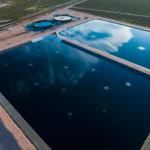
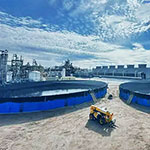

The Permian Basin will use more than three billion barrels of water for completions this year alone. Roughly 65% of that will come from produced water — the byproduct of oil and gas extraction that, not long ago, was considered little more than a costly disposal problem.
In this episode of The Water Exchange, Whitney Faircloth (Senior Project Manager) and Brandon Prill (Business Unit President, Recycling & Pipelines) reflect on how dramatically that calculus has changed — and what it took to change it. Drawing on their combined experience building and operating Select’s recycling infrastructure from the ground up, they walk through the operational, logistical, and technological evolution that brought the industry to its current inflection point.
From Select’s first fixed recycling facility at South Curtis Ranch in 2021 to a network spanning 20+ facilities, 35+ million barrels of interconnected storage, and more than one billion barrels of produced water recycled to date, this conversation covers both the scale of what’s been built and the complexity of what it takes to run it.
The discussion also looks ahead — to lithium extraction partnerships coming online in 2026 and 2027, the regulatory path toward beneficial reuse, and the role emerging demand sources like data centers may play in closing the gap between produced water volumes and reuse capacity.
Key topics include: the shift from freshwater sourcing to produced water recycling; water balancing as a logistics and forecasting discipline; DAF treatment technology and in-house chemistry; the Remote Operations Center; and the future of produced water beyond the wellsite.
Full Transcript
Hello, and welcome to The Water Exchange, a podcast by Select Water Solutions. My name is Whitney Faircloth. I’m a senior project manager.
And I’m Brandon Prill, business unit president for recycling and pipelines.
So today, we’re just here to talk about the water challenges in the Permian. A good place to start is what it used to look like and what it looks like now, maybe some of the solutions that we found.
It’s kind of amazing, especially in the Permian. I feel like, especially there, you’ve seen this this growth of the reuse and recycle industry as as a whole. You know, you think about today in the Permian alone, they’ll use over three billion barrels for frac demand this year. And of that, roughly sixty five percent will come of produced water.
So it’s it’s amazing. You know, you you go back five years, maybe ten percent To where it is today. And and that that doesn’t happen overnight, obviously. That’s takes a lot of a lot of infrastructure build out, a changing of opinions with with operators on how to use that water.
Yep.
You know, I think back to, you know, when we first started South Curtis, not everyone was was using produced water or or reusing it. You know? It was a lot of, I’d say, prove and then others follow in the early stages.
Transition to Treatment Facilities
My transition from fresh water with Select over to treatment with Select started with the building of our first facility in the Midland area, was South Curtis Ranch facility.
And that was, that was definitely a transitionary time for us at that point. I mean, that was, like you said, our our first real fixed recycling facility.
And, it it really transitioned us away from trying to use freshwater sourcing and finding new uses for the water, finding new sources of water for completions and starting to think about, hey, how do we reuse this this waste stream that is otherwise just being pumped back into the earth. And Yeah. So it was great to see, you know, that you you you transitioned over to our team and and helped us build and and operate that very first facility in in Midland.
Growth of Recycling Facilities
Yeah. Yeah. It’s been amazing. In the six years, that forty miles of lay flat that I used to run for leaks. That’s not even a network anymore. We have recycle facilities all over that area now, but it’s not really a freshwater game out there. All of the lucky timing with that especially for me being new to the oil field and getting in treatment kind of early in that time, I’m I felt very lucky to be part of that because it really did convince a lot of producers in that area to get on board.
It it did. And that’s, you know, I think that’s one of the the added benefits of of the recycling in the in general is, you know, at the end of the day, you’re you’re taking that waste stream that’s otherwise being injected in the earth and putting it back to use.
You can reuse it as many times as you need. I think one of the big challenges is is, though, there’s a there’s a very large gap between what comes back versus what we reuse, and it’s figuring out that next step in the evolution of what do you do with that water, that that gap that we don’t have solution for to reuse.
So there’s there’s a lot of things that I think, you know, we we’ll see change in the industry over the next few years. And, you know, certainly, data centers will play a play a role in that along with, hopefully, surface discharge at some point to where we’re not having to inject that water.
Economic Impact of Water Treatment
Yes. Yeah. Whenever we first started, water was viewed as like such a problem both in sourcing, you know, as fresh water fifty, seventy cents a barrel and then having to dispose of it for close to the same amount. It was just a problem in and out and then treatment came along and now it’s like you have one price.
You send it to us and you get it back, you know, actually recycling it. But I I wonder what’s next on me. I know everybody talks about beneficial reuse and how far out it is. Do you have any predictions of how far we are?
I know that, you know, we’re not the only ones thinking about it. There’s a lot of different companies that feel like that there’s going to be a solution sooner than later. So I I, you know, I I would hope in the next few years, but time will tell on that front.
Yeah. Yeah. I like that we’re already putting money towards it to figuring it out that that whenever the laws are written, we’ll be able to to meet that challenge.
Absolutely. And, you know, I think the the good part is, you know, especially here in Texas, they’re they’re collaborating with industry. It’s not just a regulatory, rollout. It’s it’s taking input from industry, from the environmental aspect to to make sure that the rulemaking helps everyone, industry and and the environment as well.
Construction Challenges for New Facilities
You know, stepping back to South Curtis Ranch, you know, one one of the interesting things there to me was really from that point forward growing into what we have today. And, you know, we we said it it took time to get to where we’re at, and we’re certainly not done, with with what we’re doing. But, you know, it’s it’s a lot of construction effort. So it’s, you know, if you think about the timing of when we sign a deal with a customer to bringing that asset online, it’s sometimes years in the making.
So, you know, I know in your experience, you you’re on the front lines of getting those assets online. So I’m kinda curious from from your perspective, what are some of the challenges that, you know, slow you guys down on the construction front or, you know, present roadblocks that make your your life a little more difficult getting those assets online?
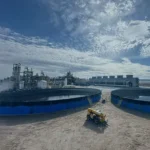
Mean, they’re all pretty unique depending where they’re at. But one of the problems or challenges could be just finding enough space, you know? Our facilities take up about forty acres normally.
And just finding enough space for the facility and the storage because we’re working off of a balance. Right? Like whenever flowback is happening, we’re not just treating it and immediately sending it back to frac. We have to store this water until somebody within that area needs it.
So our facilities take up a lot of a huge footprint. So sometimes just finding the space for that on fields that are pretty developed and then permitting for them, I’m not part of that, but I hear that can be challenging sometimes.
Yeah. And then the actual build, I feel like we have it pretty down. I think we’re, what, twenty twenty something facilities in at this point.
Yep. In your opinion, what do we need to do right for that to be a seamless transition from construction to operations?
Just the fact that we have over twenty under our belt is something that really helps because we kinda have a formula. We know what works. We know what pieces of equipment we need. We know lead times.
Sometimes getting these large pieces of equipment, the lead times can be pretty long. But now we we have all that. We have our vendors lined out. Our operators are just our partnership with our operators is they trust us to get it done and get it done right and to respect the land that we’re on whenever we are working.
Storage Solutions for Water Management
So, yeah, just having over twenty facilities active, it really helps our credibility and for people to know that we can get it done and get it done on time.
Yeah. And I know I know you brought up storage and that’s to me that’s one of our, I think strengths is, you know, we’ve got over thirty five million barrels of storage online today And, really, we’re we’re in the process of trying to connect a lot of that with pipe, which, obviously, you’re you’re in the middle of. But to me, it, you know, it helps create a situation where we can help operators peak shave when they see those flowbacks at their all time high when they’re post completion. And so with that interconnected storage, we’re able to take on their volumes without having to interrupt flow and not necessarily have to inject that volume down down an injection well. So to me, it helps not only keep our our assets running more consistently, but also it helps take that water away from potentially being injected by utilizing our our our asset base and sending it to the different storage we have.
Yes. It is nice that if that does come up, like the water balance doesn’t work out because frac shifts because we all know frac does not depend on water availability.
We do have options for disposal.
We do. And and that’s the a unique challenge as well is is timing. Right? Because we have that barrel ready for that operator’s use.
They don’t always need it exactly when they think so. Having that storage gives you that flexibility to go back and forth of whether you need to pull on the storage itself or you need to fill it up. So it gives you that buffer to really do what you need to do and and not shut operators down. Yeah.
Balancing Water Supply and Demand
And and and water balancing in general, you know, it’s it’s really a an exercise of looking at your inflows, your outflows, what storage you have available, and figuring out that delta between the two.
And then the communication with the customers, that forecasting, knowing what they are projecting.
Right. Yeah. And then, you know, marrying the frac schedules with the supply that’s coming in and, really just making sure that you’ve got a good understanding of both of those. Because if you don’t, then you’re gonna run into fundamental issues of either filling up too fast or too slow and not having enough water for the demand side, which is the frac completions. So it’s it’s a really intricate balancing act in in my opinion. And we do have several folks that I mean, that’s their primary focus is getting schedules from operators, both on the the production curves that they feel like we’ll see off the wells that are online and then also, how much water they’ll need on the on the completion side to complete the wells that they’re fracking. So It’s a it’s a really a a balancing act of of both of those inputs and outputs and making sure that we take care of the customers at the end of the day.
Yeah. I think balancing also has a then versus now. Whenever we first started treating at South Curtis Ranch, it the the forecast might have gone through the year, but now we’re getting much more than that forecasted out. And now that it’s more of a co op, right, with all those producers in the area, they’re all sharing their forecasts. And it seemed like that was very need to know information whenever we first started, and they weren’t trying to cooperate maybe with each other. You know, it’s competition, but at the end of the day, their water would be reused for someone else. And if we didn’t know that we could do that, they were going to have to dispose and pay to dispose of it.
Collaboration Among Operators
So Yeah. Absolutely. And that plays directly into the timing aspect of, you know, you may not have a need for your water today, but your neighbor might. And if we can share those resources, you preserve brackish and freshwater sources, and then you also use more of that produced water that’s otherwise getting injected. So it’s really it’s a double benefit there, of taking that approach.
Yeah. I know one of them was very proud about having their disposals off for for over a year.
Yes. Yeah. That’s a very big deal when you and it’s funny because you you don’t want low utilization assets, in the disposal world, sometimes that’s not a bad thing.
So whenever I was doing water treatment operations, we had just a spreadsheet that had all the water forecasted coming in, forecasted coming out, and that’s kind of how we managed our balance.
The more facilities, the the more inputs and outputs, the more complex the spreadsheets get. So we’ve been working towards creating a internal software that our balancing team can use to to automate some of that process so that you’re not just solely relying on a spreadsheet.
Automation in Water Management
And you you can feed it the schedules that you have, your inflows and your outflows, and and have that, system help determine where to best move the water to to to create the least stress on the system.
Yeah. I’ve I’ve heard it said that the water is kind of a shell game. You know, you’re just kinda moving it around to the places that it needs to be. And now with the infrastructure that we have and the pipelines that we’re putting in to connect all these facilities, I would think it would be a more fun shell game because you have so many more options.
It’s fun is, one way to describe it. More challenging, for for sure. You know, it’s it’s not just moving it from a to b anymore. It’s it’s sometimes a to b to c or a to b to c to eventually f. You know, I mean, we’re we are using it exactly as you described as somewhat of a shell, to take water from positions where we’re long and move it to positions where we’re short.
And then eventually, that will change as as completion activity moves, and then you you go back to rebalancing. And that’s the nice thing about this tool is we’ll have a sandbox where we can play out hypotheticals of, you know, different operators moving to different areas with different demand levels and playing that scenario out, with our balancing to see if we’re if we can handle the work, that that’s being asked of us.
And then the frac schedule moves.
And then it does. And then we redo the the activity all over again.
Yes. Yep.
On a daily basis.
The water balance, I know that that’s more of a internal document that we kind of move around between the people that need to know it. But we do have the center that can show us live what our assets are doing. Does the rock have anything to do with the water balance?
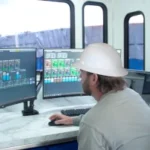
Yeah. They do. In fact, I mean, there there are eyes and ears, at facilities when we can’t physically be there. Or if if we’re in a different area at the facility, we have cameras in place to where they can keep eyes on water levels and and tanks, water levels in the pits, and can physically get ahold of our operators at any given time to make sure that we don’t have a spill or we don’t have a, you know, a piece of equipment go down that goes unnoticed for a couple of hours. So to me, the the remote operating center has been, like, really a game changer for us.
You know, a lot of our competitors and and operator friends have their own similar type facilities, but I do feel like ours is it’s it’s state of the art. It’s it’s pretty amazing when you walk into Gainesville and go up the stairs and and see the the, center there, with all of our employees working in it. And the giant screen that lights up the, the the night sky if you’re driving by on thirty five as well.
Nice.
But, yeah, it’s it’s amazing. They you know, I mean, two o’clock in the morning, you know, you might have them pick up the phone and call your operator, and that operator doesn’t answer. They’ll go up the food chain and call the manager until we get someone on the phone that can address the issue right away. So From a EHS standpoint, it’s been a game changer. From, you know, facility mishaps, it’s been a game changer. And it’s really a tool that I think will will take us into that next evolutionary step of how we wanna operate our asset base.
Advancements in Remote Monitoring
That’s amazing. Yeah. I think about my first facility and what automation was available for that one. I mean, we did have, you know, meter readings. I could see the facility on a screen, but it was just at the facility. So that’s awesome that we have a lot more eyes on it now.
Yeah. Yeah. And it’s not and and we hadn’t taken away the that functionality or that ability at the facility level. Right?
So they still have the ability to do all the same things
At the facility itself, but you can also do that in Gainesville. Or if we have any issues with the Gainesville center, it automatically, backs up to our Midland facility. So we’ve got built in redundancy to make sure we don’t have any mishaps, with, you know, power outages or anything that can and and will happen.
Nice. Yeah. Redundancy is king for sure.
Automation, I feel like, is a really important piece. But, I mean, when you first started in the operations side, how do you feel like automation really played into how we operate the facilities versus where we’re at today?
Whenever we first opened up that first facility in Midland, I mean, were diesel pumps, tank levels could be read on a monitor inside the main trailer. But if I was out, like say one of the diesel pumps went down and I went to go fix that and another one was right next to me very loud still running, That tank level is still rising and I’m blind. I have no idea. Like I know I’m frantic, but I don’t know what I’m, you know, the level of pressure that’s happening. So it’s great that they have more eyes on it than you and that they’re calling because my if my phone rang, I wasn’t gonna hear it next to that other diesel pump. So that they’re calling supervisors to get other people involved because it it doesn’t take a lot of manpower to run these facilities when they’re running smoothly. But whenever things go wrong, sometimes it could you might need some more hands.
Absolutely. And the amount of time it takes to manually go shut every valve and to make sure that you don’t have a mishap with only, you know, one or two guys or girls on on-site, it’s very difficult, like you said, to get to everything. And, know, it’s funny you you mentioned the the or the audible or audio kind of notification.
And I remember, I think it was at the facility that you were first started at, we had to actually install a tuning fork Yes. So that you could audibly hear the alarms when they would go off.
And now we’ve got someone that, you know, they’re watching that for us. And if you don’t hear it, you might feel it, something buzz in your pocket And react. And and if you don’t do either, they have the ability to shut that as well. So we don’t have that catastrophic failure. So it’s automation, I feel like, has has really enhanced our ability and also given us, the ability to take on more work with the same amount of staffing. So it’s really helped us grow that footprint without requiring a huge uplift in in labor.
Yeah. And it’s like you said, automation has made an impact on our, safety. I am sure there are stats floating around out there about how much lower our incidents are now that we have all this automation working for us and so many more eyes on it?
Yeah. Absolutely. And it it not only, you know, it helps from the safety standpoint, but also the environmental standpoint. Right? You have less water actually hitting containment and less water hitting the ground ultimately, which is a positive for the environment and the industry as a whole. So it helps us operate in a much much safer fashion because of that.
I remember whenever that first facility hit a major milestone, fifty million barrels How excited I was to be a part of that. And now we have a new major milestone within Select.
Milestones in Water Recycling
We do. Yeah. And it’s, it’s, you know, started really in twenty one when we started tracking it. You know, we were we only did maybe twenty million barrels that first year across all of our facilities.
And, you know, fast forward to today, we’re expecting to do close to four hundred million across All of our facilities. And, you know, we just recently, surpassed one billion barrels of of water recycled and and, reused for completion purposes. So, major milestone for us. It’s it’s you know, we’re not gonna stop there.
I think we’re gonna keep, you know, trying to grow that to as as large of a number as we can.
But we we did also in in that same stretch hit a million barrels of produced water coming into our facilities on on any given day as well. So, definitely, you know, the it goes to show the intensity of, you know, the the fracks that we’re helping with and then also the the sheer volume that’s coming back from those wells once they bring them online.
Right. A million barrels that would have been disposed otherwise.
Yes. Yep. And and we we frequently talk about that wall of water, and and this is one of those tools, you know, with both the recycling facilities themselves and the interconnected pipes that go between them. That’s how we can start to really move the needle on reducing those those volumes that are ultimately injected and and try and take care of that wall of water problem that we’ve seen in the Permian for the past few years.
Yeah. I’ve been amazed, you know, being out in the field and and moving from operations over to infrastructure, what it takes, the investment that it takes to make this interconnection between our facilities happen.
The investment to me is amazing. What Select is willing to put in to the infrastructure to make it so that we can move that water among our current assets and to make it worth it for the producers.
It’s just that’s a really amazing thing to me. I’ve man, I wish I had stats on how many pipelines and facilities that we’ve done since I started two years ago now about, but it’s a lot.
We’ve done a lot of substantial growth. Yeah. And and, you know, if we look back at twenty twenty one, when we really first started, I I’d say trying to actively grow our position aggressively. You know, back then, we had really three facilities. You could call it four with maybe, you know, five million barrels worth of storage across all of them. None of them were interconnected.
And, you know, we we you fast forward to today and, you know, as I mentioned, we’ve got over thirty five million barrels of storage. We’re working to add another five this year, so we’re north of forty this year. And and a lot of that will be connected via pipe. So you’ve got that that longer runway. And to your point, as you as you build out the infrastructure, you’re building out positions where you’re taking water from areas that are maybe oversaturated and taking them to areas where there aren’t available water options. So you’re taking care of a couple different needs the operators have when you’ve got that pipe to connect point a and point b, and hopefully eventually point c, and we keep building out that infrastructure further and further. What do we do with that water once it comes into our one of our facilities?
Water Treatment Processes
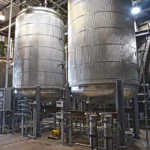
Usually we have like a storage tank that’s kind of a buffer so that we are allowed some time just in case there’s different surges of water coming in, different volumes coming in. And then from that storage tank, we move it over to the actual treatment area.
We use DAFs, Dissolved Air Flotation Technology, in combination with chemistry also. And that is one thing that is really nice about Select. I know whenever I first started out treating water, I didn’t know much. I had I was sent to New Mexico to treat water with those guys for about a week and then I came back to open up a facility and they came with me.
Thank goodness. So I did have a lot of mentorship but it was nice that we had a chemistry lab. You know, we owned our own chemistry. We have our own chemicals so that if we are trying to figure out some kind of strange water that we haven’t seen before, then we could just send a sample to the lab and they could tell us exactly what we would need to do to get that water clean enough for frac and to meet the specs.
Yeah, and it’s been very helpful having the chemistry team there, especially like you mentioned when we have the challenging water that maybe we don’t know the exact chemical mixture we should use and they can help us with, demand, testing on on what exactly we should use from a chemical standpoint.
And even overtreatment. Whenever I first started out, that was a big thing. You know, if there’s a problem, we just threw everything at it. And they could tell us, no. It does not take that much. Go ahead and back it down.
Right. Yeah. And that and that’s a very good point. You know? I mean, that’s the you can underdose and you can overdose.
And, you know, the the sweet spots for us is really getting that water exactly to what the customer needs and not overdoing it. Yeah. And it’s it’s interesting, you know, I mean, that’s our lean in approach now with the DAF technology. And, you know, when we first started, I mean, it was a lot it wasn’t necessarily the lean in.
It was a few different approaches of possibly using just AST storage, using treatment pits before we went to storage or using DAFs. Right? I mean, we we have kind of a hodgepodge of our approaches and really feel like we we went down the road of the dissolved air flotation just because it does a better job at cleaning up your suspended solids and removing iron from the water, which is a pretty important piece in cleaning up that water to get it back for reuse.
And speaking from infrastructure, it’s a much smaller footprint.
Those treatment pits that we were using before, it takes up a lot of room.
It does. Yeah. Yeah. Absolutely.
And the DAF situation also helps with it being an like Legos. You could just add another DAF. If you get another customer that wants to tie in new flowback, whatever it is, we can just add another one on and suddenly our facility can handle twice as much throughput.
Absolutely. Yeah. And and and it’s, to us, I feel like it’s it’s something that’s a necessary, addition or or ability to bolt on that extra throughput because you may need it today, you may not need it tomorrow. So having that ability to take that asset, put it at another location helps us be more effective and and keeps our utilization on our assets higher.
So whenever we first started treating water in the Midland area, we knew a a broad idea of what chemicals it would take, what the water was going to look like. But one of my most recent facilities that we built, we were able to go to that producer, test some of their water that was already coming up and know exactly how we needed to build that facility based on what we need to do to that water to meet their specs to go back to frac. So I I think just the amount of information that we have now compared to whenever we first started and how agreeable everyone is to sharing that information has changed so much and it’s made this not just doable, but it’s it’s beneficial for everyone.
It is. And, you know, especially if you think about the different water that we’re getting from operators, it’s not always the same type of water. There’s different constituents.
There’s, different things that we have to remove from that water to get it back to usable level. And especially once you start layering in different types of water, having an ability to profile that water and and recall it, makes us more effective. And it and it ties back into our chemistry team because they have all of that on record and they can tell us a lot faster than just trying to remember the last time we encountered a specific issue with a specific constituent.
And a lab test will always be a field test. It’s great that we have the ability to do our field tests to make sure that the water’s in spec, but it is always good to just send some samples to the lab and get back real lab testing.
Yeah. Absolutely. It it it it’s really a double check, right, to make sure that we’re we’re getting the right readings, our testing equipment is operating and functioning properly, and that, we’re not having any issues with the testing procedures themselves and that they match what the the lab is showing. So, yeah, it’s it’s definitely especially having one in Midland where you’re not having to send samples off to Houston, certainly helps our ability to react in in near real time to changing water qualities.
It seems like every year there’s a new buzzword, you know, so beneficial reuse and then it was desalination, and now we’re hearing lithium a lot.
What does that look like for Select? Are we a part of that?
Emerging Trends in Lithium Extraction
Yeah. I think we’ll we’ll play a pretty important role there, especially with the volume of water that we aggregate on a on a specific day. Being able to feed that to a lithium extraction plant, them do their process, remove any lithium that’s available in the water, and then us take it back and reuse it. It just it it adds the value or it’s a value add of the water that wasn’t necessarily there previously.
It was there, but no one was thinking about trying to extract that. And it is it is relatively small amount if you look at on a on a per gallon or per barrel basis that you’re extracting from that. But with literally hundreds of thousands, if not millions of barrels coming through our facilities on a daily basis, it does position us to be able to assist in in some of that lithium extraction process, even if we’re not the ones physically doing the the extraction itself. And if you’ve kept up with any the news, you’ll notice we we have lithium extraction plants, coming online that we’re partnered with, later this year.
We’ll we’ll have one in East Texas, and we’ll be focused on the Permian, in twenty six and twenty seven as far as, helping assist in in getting water over to those extraction facilities.
Yeah. I have not heard a lot about the lithium. I just knew that was the new buzzword, so that’s exciting that we’re going to be a part of that. And then it’s one more way that we can do something as a solution with this water instead of keeping it as a problem. Select’s growth just since I joined the infrastructure team has been expansive. And I know at some point that will slow down because, I mean, it seems like we’ve covered a lot of area and like our web of network is already so interconnected. I know that there’s still a few needs, you know, to connect the smaller pieces, but what we have right now is is already a really large interconnection and able to work with that balance and that forecast for so many operators.
Future Infrastructure Developments
Yeah. And if you think about it like a utility, the terminal’s built. Now it’s just expanding out from there and connecting different components. It’s amazing with the, you know, the build out of our New Mexico assets as we as we finish that up, you know, what will be coming down the pike after that. And in my opinion, and we won’t see these large chunky build out, but it’ll be a little bit more organic and and bolt on type build outs where, you know, we’re we’re making a small one or two mile connection, not a two hundred mile pipeline build out.
So it’s it’s a little bit of a, you know, take a step back and and see, you know, where there’s gaps, between the assets that we’ve built And trying to build out to those gaps rather than build something that’s a little bit more, all encompassing.
Yeah. My last three pipelines, I think, have been like two to four miles. They have been shorter runs. Next one coming up is ten miles. So I know that we’re still, you know, gaining traction and connecting all of our facilities and, know, connecting the producers that have a need, but it does seem like it is shorter runs lately.
It should be. Yeah. And and and that’s, you know, nature of the beast. You know, as you as you start to try and get into operators’ developments, you really shouldn’t have to build out large, large positions. Should be smaller bolt ons that really help aggregate that water even further from from where we have it already.
Yeah. My my last three actually have connected to our existing network. So that has been exciting to connect to something that I built in the first place, you know, a year ago.
Absolutely. I do have a few rapid fire questions.
Shoot.
Industry Changes Over the Last Decade
Alright. So what do you think has changed the most drastically over the past ten years in our industry?
Oh, great question. I’ve only been in the industry for six and a half years, so I can only answer from that. But the amount of growth and changes that I’ve seen in that short period of time, I just I’ve grown so much in this in my roles and I’ve been afforded to change roles within the same company, which has been amazing. And so I’ve been able to see, you know, how much treatment has changed, how much our approach to infrastructure expansion has changed. Alright. Your turn.
I would say the just the frac intensity in general. You know, if you look back ten years ago, you might you might do, you know, fifty thousand barrels per well. And we’re doing three, four, sometimes five times that in a single day now. And so just thinking about it from that perspective, it doesn’t just change, you know, the the volume you need. It changes the amount of equipment you need, how quickly you might run into an issue because of a spill, or automation going down. So it’s it’s a much quicker, faster pace today than it than it used to be, and I’m I’m excited to see where that takes us, because, you know, I’d I would have told you ten years ago, you know, two hundred thousand barrels a day going to a single job is crazy talk. And and here we are today, and that’s that’s the norm.
What would you say is one thing that people misunderstand about produced water?
Oh. Someone not in the industry. We’re actually going to a small school, me and a group of the other women that are in the industry, and we’re gonna talk to a group of fourth graders. And that was kind of my first question for them.
What what is your concept of the oilfield? And I’m excited to hear what fourth graders have to say about that because I think that a lot of what we know might be coming from the show Landman now, you know, that that is their understanding of what Oilfield is. And while it is a little bit, you know, western on some days, it is it is not exactly that show. But I think a lot of people think that produced water can only be harmful and we’re just we’re finding a lot of ways to use it in a beneficial way.
I think a lot of people misunderstand produced water that it’s only a problem that we have to deal with. I think we’re really in the process of showing that there can be a benefit of produced water. And what do you think the biggest challenge is that needs our attention?
Challenges and Opportunities in Produced Water
Gosh. I feel like a lot of our attention and our money is going to the right places right now.
Just the fact that we’re investing money into the possibility of beneficial reuse, I think is is good. But if we could just get more attention on getting the regulations passed, it would really speed up this process so that we know what we’re aiming for. What about you?
I think we’ve got a lot of questions that are being addressed, and and I think the industry has taken very serious, you know, especially, the delta between, the the produced water that’s coming back and the frac water demand and what to do with those barrels, outside of just injecting it down downhole. So I think, you know, I think we’re doing a pretty adequate job of addressing a lot of the challenges.
Thank you, Brandon, for joining me on the podcast.
It’s been my pleasure.
Conclusion and Future Outlook
And that’s it for the water exchange. Thank you for joining us. If you wanna learn more about what Select is doing in the industry, please go to our website at selectwater dot com and we’ll see you next time.
To our podcast audience, these presentations hosted by Select Water Solutions, Inc., referred to as “Select” or the “Company,” including any associated discussions, documents, or materials are presented for informational purposes only and does not constitute professional advice or consulting services. The opinions expressed during the podcast reflect those of the individual presenters and do not necessarily align with the views of Select or any affiliated oil and gas entities. To the fullest extent permitted by law, Select, its agents, and experts disclaim liability for any damages, losses, costs, or expenses—whether direct, indirect, or consequential—arising from your engagement with the podcast or related materials, even if due to negligence. By accessing this content, you acknowledge that it may contain inaccuracies, is subject to change without notice, and is intended solely for your general use.