

In episode 9 of The Water Exchange, Mike Lyons, EVP and Chief Strategy and Technology Officer, and Garrett Williams, VP of Corporate Finance and Investor Relations trace Select’s evolution from a water services company into a water midstream and infrastructure business, and explore what that shift means for operators, investors, and the industry at large.
The conversation covers the economics of produced water recycling in the Permian Basin, what long-term contract structures mean for how Select goes to market, and the growing role of technology including Select’s Remote Operations Center and its computer vision and leak detection capabilities. Mike and Garrett also discuss Select’s mineral extraction partnerships across lithium and iodine, municipal water projects, and active conversations with data centers and industrial customers. If you want to understand where produced water infrastructure is headed and how Select is positioning for it, this episode is for you.
Key Takeaways
Select’s solutions have evolved beyond traditional water services.
Where Select once operated primarily as a water solutions provider, the business has grown into a networked infrastructure platform serving the full lifecycle of produced water. The company’s roots are in execution: getting water moved, staged, and delivered in the field, often in the middle of nowhere. That hands-on capability didn’t disappear as Select grew into infrastructure; it translated. Today, roughly half of the company’s profitability comes from water midstream and infrastructure assets, built on a foundation of long-term contracts, networked recycling facilities, and gathering pipelines that connect what used to be isolated, single-operator assets into a basin-wide system.
Recycling is the intersection of good stewardship and good economics.
Select operates the largest commercial recycling network for oil and gas use in the Permian Basin, and the economics behind that position have become undeniable. While many companies can move water logistically, Select goes further: pretreating and recycling produced water to prime it for reuse. That recycling-first approach saves operators roughly 20 to 30% on produced water takeaway versus legacy disposal, and delivers recycled water back for new well completions significantly below the cost of a freshwater barrel. Produced water recycling is a meaningful relief valve as basin volumes grow and permitting for new disposal wells faces increasing regulatory scrutiny. The Delaware Basin alone produces six to seven barrels of water for every barrel of oil. Select has recycled one billion barrels of produced water since 2021.
The investor conversation is fundamentally changing.
Long-term contracts, many exceeding ten years, have transformed how Select talks to capital markets. The company is talking to a different kind of investor: not just energy-focused funds, but water-thematic generalists drawn to the infrastructure story and the importance of produced water to incremental oil production. Garrett Williams notes that the question from investors has shifted from early growth questions to payback and performance, a sign that the model is maturing.
Select’s principled approach to technology has results showing up across the business.
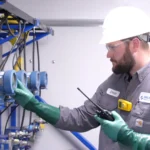
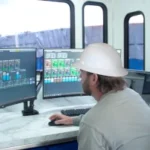
As Select’s network has grown, so has the operational complexity of managing it. The company’s response has been deliberate: build the technology in-house, layer it over time, and design it specifically for the realities of mobile field infrastructure. At the center is the Remote Operations Center in Gainesville, staffed around the clock, monitoring the majority of the company’s US operations, from permanent pipelines and fixed facilities to short-term water transfer jobs where equipment is constantly on the move. Computer vision systems watch camera feeds for reflectivity changes that may indicate a leak, flagging them for human review before anyone is dispatched. Separate systems verify that workers on-site are wearing proper PPE. All of it runs on SCADA infrastructure that has to be configured for every job, a uniquely difficult engineering challenge that off-the-shelf systems were not built to solve.
Produced water has optionality that the industry is only beginning to unlock.
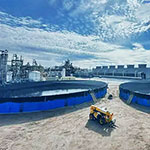
The areas Select operates are historically water short at the surface but sitting on top of formations that are water long subsurface. Treating produced water to near-distilled quality and making it available industry-agnostic creates value that extends well beyond the oilfield. Select is already serving hyperscalers on-site during data center construction phases, supporting dust control and cement manufacturing. Active conversations are underway with chemical plants and municipal water users. On the mineral extraction front, three lithium partnerships are in place across different areas of Select’s portfolio, and a newly announced iodine agreement with ISE Chemicals extends that model. Select’s position is uniquely enabled by the fact that it already controls, touches, and treats the barrel.
Full Transcript
Everyone. Welcome to the Water Exchange podcast presented by Select Water Solutions. My name is Mike Lyons. I’m one of the Executive Vice Presidents of Select. I’m also the Chief Strategy and Technology Officer.
And I’m Garrett Williams, Vice President of Corporate Finance and Investor Relations. Today, we’re going be talking about Select’s transformation to a water midstream and infrastructure led company, some trends we’re seeing in produced water and investors focus around produced water, and a few new frontiers we’re working on. But Mike, before we get in there, maybe a little background on yourself and what you do at Select?
Sure thing. Like a chief strategy officer can mean a lot of things for a lot of different companies. And so at least what I’ve experienced when I was out prior to joining Select, but then eventually joining one of the things that I was just fascinated with and I loved about Select is the, I think Chris, our CFO showed me the spreadsheet of all the different acquisitions and all the pieces that used to be not a part of Select that now are a part of Select. I think it was eighty plus single asset bolt ons acquisitions, major company acquisitions. It’s fascinating to me where the company started and where it is now.
There’s very much a need and there was a demand for, overall corporate strategy. And then we’re a very entrepreneurial and execution oriented company. So I think very quickly we got into segment level strategies, BU level strategies, but most importantly, I think just execution.
My role we do, yes, some of that blue sky strategy work, but a lot of it is around just taking some of the execution workload around special projects, around new business builds. It started simple and now it’s expanding a little bit, but that’s where we are today. And that’s after, I don’t know, it feels like a lifetime in management consulting before joining Select.
Quite a few hats and no dull days.
So on my end, I’ve been at Select eight years now, done all things corporate development, finance and IR. So certainly seen a lot of different pieces of the transition here, but maybe one part of that is we’re a water midstream focused and infrastructure focused company today. We haven’t always been that way. So maybe dive into a little bit of that, Mike, and how we’ve kind of transitioned and now seeing the fruits of that transition.
We did everything from bar transfer to renting equipment.
We had an accommodations business. So getting people set up on-site so they can work out in the middle of nowhere often.
And very services and get stuff done in the field oriented. And frankly, I still really love that about select because it means often, it’s easy to say, go move this water here, go take care of this. But like we were hands on getting things done in the field and that execution bias and execution capability, started in services, but I think it’s still very present both in our chemicals segment where we still manufacture and distribute and sell chemicals. But even in our infrastructure business, which has very different commercial and operational footprints, but still that like can do execution mindset. You’ve been a big part of this transition as well in your roles in corporate development also. I mean, you’ve seen Select grow beyond a services company and an infrastructure. How would you characterize maybe that first step?
Yeah, I think partially, we saw the transition and those first steps because the industry demanded it.
If we take a step back, when we were doing conventional developments, wells were consuming sixty thousand barrels of water to be completed.
You look at today in unconventional development, these wells are consuming five hundred thousand to six hundred thousand barrels of water to frack with. And so Select was at the forefront of delivering those high water volumes and high rate water volumes to these And as you saw the industry kind of in a second phase transition to the ability to reuse for completion of that well, I think that introduced the opportunity to look at recycling as an infrastructure platform in a way to serve those completion needs. And kudos to some of our C suite folks at the time saw that as a way to kind of pioneer that next step in produced water management and identified a second avenue of relief for produced water, which is to be reused in the industry. And so I think that’s kind of the first step and that would have, our first recycling facility would have been in the Midland Basin around the twenty nineteen, twenty twenty timeframe. But I think that’s the first time we saw that evolution start.
It’s interesting to me, like even that version of what we still consider infrastructure, that was a single facility.
It was tied into at the time predominantly one operator.
And, you know, it wasn’t the scaled infrastructure play that we’re playing today, but yet we still knew and had to prove out at the time that we were gonna save operators money, both on the lease operating expense on the back end of handling water, but also on getting water back out to them. So cutting well capital. So we knew the model was there.
That kind of wetted our appetite both for fixed facility recycling and really getting the way we do chemical treatment, way we do our DAF tanks, the way we remove solids and iron, and getting the single facility model really hammered in. But also along the way, we also started picking up disposal wells. And so you kind of saw that first evolution of having a recycling facility also tied in to a recycling or disposal and recycling paired together.
Yes, we organically developed some of this recycling, but we did put a lot of disposal together through distressed acquisitions on the backside of COVID.
And the result and product of us pioneering recycling and getting some of that scaled infrastructure that was isolated assets at the time, it gave us the ability to kind of connect those and make a network system that I think has streamlined the company and made it a different profile than it was in twenty eighteen.
We might’ve been five thousand to six thousand employees with isolated assets till now when you’re closer to about three thousand employees, networked assets and infrastructure and a profitability stream that is about half from water midstream and infrastructure related business.
The way that we partner on the water transfer side with a highly engineered movement of water out to these fracs, not only getting it staged, but also bringing it to the frac horsepower. That is a core competency of ours. We run the biggest bar transfer business in the nation, and that includes managing all the water on the pad.
That’s something that we can commit to customers. We have all the SCADA systems and automation and all that to make it happen.
And then it’s incredible to see that now translating into the bigger commitments we can make to our operator partners around infrastructure. Like we’re able to commit to firm takeaway in some cases, having matured our model to this point, having very long term contracts in place, and just knowing that the model works, it allows us to create a lot of value for our operators and our partners in the field. But also for us, we have repeatable, predictable performance.
Yeah, and I think part of what makes you know, the Select story appealing to investors and the message we want to get to investors is the same message that resonates with operators that recycling is a solution that saves money for the operators on both their CapEx demand and also on their lease operating expense. We are a cheaper barrel to rack with recycling treated water that is. And then on the produced water management side, recycling is a cheaper alternative than legacy disposal.
And it’s in basin And it’s new capacity.
Yeah. It’s new synthetic disposal capacity that soaks up barrels, which only helps.
We consider regulatory risk and seismic areas and states that are less friendly to new permitting of disposal wells.
Correct.
It’s a pretty important alternative to have and to alleviate some of the produced water needs here.
Think another thing that’s pretty important on what we’re doing on the Select side is that we are able to look at produced water across the basin and handle produced water, both disposing of it, treating it for recycling, but also kind of looking at the future, which you’ll talk on later.
So I think all those key pieces are important to investors, but Mike, you’re in a lot of these meetings with investors with me, what kind of key themes do you think stand out for you in those conversations?
A lot more about growth, very, very growth oriented.
We get asked consistently, what kind of payback do we expect on the capital that we are putting out? And are we seeing the actual results deliver?
Certainly all the growth capital that’s going into New Mexico, I mean, that is performing extremely well. And in some cases, even above where we underwrite. And then as you mentioned, as we’ll get into, I mean, we get a lot of questions around our growth beyond oil and gas.
And some of that is into mineral extraction and production of these minerals. Some of it is into municipal and industrial growth, which could include serving data centers and so on. And then we also get asked a lot about desalination and other ways to find incremental disposal in a, frankly, a basin that’s just desperate for that incremental capacity.
We are a scaled player in a lot of what we do on the services and in the chemical side, and we’re industry leading in those departments.
We’ve got a really strong chemicals company delivering friction reducers and surfactants that I think takes market share in our last mile logistics businesses, the largest by several factors and we think technology leading in that department as well.
So certainly we had things to resonate with investors, but now the story is much different because you’re talking about a business that is largely supported by long term contracts in excess of ten years. You’re talking about a asset and earnings stream, underwriting that is more resilient and produce water that has a longer tail to it. And so I think the discussion with investors is much different now. You’re talking to a different investor group oftentimes, the produced water thematic and the importance and how paramount produced water is to the industry and the production of that incremental barrel, I think, is getting larger acceptance. And so you’re also talking to investors who aren’t just energy folks, you’re talking to generalists and people who find their way to the select story through just the water in general thematic.
The market has changed. We now have and enjoy a competitive set around us of folks that move and manage water for a living.
But I do think that our model is still differentiated and different because we’re recycling forward.
It is the intersection of good stewardship and good economics, which is why it’s been a disruptor and allowed us to take market share and get a lot of that greenfield development and growth opportunity in the Northern Delaware Basin.
The produced water that we are taking away from the customers, can do so at about a twenty to thirty percent discount. It’s in basin, it’s logistically correct in New Mexico. And the water we are selling back to the operators for reuse and new well activity is also about twenty to thirty percent cheaper than that freshwater barrel alternative.
So it really is a disruptor because it makes sense economically for our operating partners. It just so also happens to be a really nice, sustainable solution and alternative to the legacy avenues of relief for water management.
And I would argue that we’re taking advantage of a very unique geography and a very unique moment in history and in time where we can grow almost unconstrained, given our position in particular in Lea and Eddy County, and granted some other growth areas around the lower forty eight, where we still operate and we enjoy strong positions.
And again, back to kind of the purpose of what I was getting at is like you talk to investors about what Select all about. It’s a company in transition that has an operating model that has great fundamentals.
I think that’s a lot of what at least I like to share with investors and hopefully that gets them excited.
Produced water management, of course, in my world is becoming more topical and thematic for investors. And as a public company, we work for investors, but foremost, we work as well for our operating partners, as I mentioned. And so, maybe talk a little bit of where water’s headed and how paramount water is to our EMP customers.
Yeah, I mean, is the lifeblood of unlocking these reserves. And I think the best rock in the United States is in Lea and Eddy County from a payback perspective, from an IRR perspective, from a tier one acreage perspective, total post holes or total well locations. So there’s tons of super high quality inventory in that area. That’s where the majority of our growth capital is going. So I think we feel very excited.
Storage is very helpful. It helps you manage all the swings across the system. So we’re building out storage or building out long haul, bidirectional large diameter pipelines. Again, that allows us to balance the longs and shorts of the water.
And then more importantly, each individual customer benefits from that system, both for our own benefit, but also for our customers benefit. If you’re making a clean barrel somewhere along the way, you also need off take.
And so that’s a little bit where you start to have the discussion around getting outside of oil and gas.
We’re managing about one point four plus million barrels per day of produced water right now and growing, we should add to that on an exit rate by the end of this year here.
And that’s because, as I mentioned earlier, it’s bringing value to our customers and we have the ability through this now scaled network to manage this water across basins and across states.
And so as we look ahead to these kind of other developments and other opportunities, I think Select is well positioned because our contracts are around the produced water barrel. It is contracted to us and we can use this recycling platform as kind of centralized hubs of sorts to take that produced water in and become a market maker and see, does it need to go to disposal? We’ve talked a lot about recycling, but we are growing our disposal capacity at a pretty high rate as well. We continue to bolt on disposal wells often or inorganically through kind of some M and A work we do at Select.
And we’re going to continue to scale both recycling takeaway capacity, but also disposal capacity. The industry is going to need both. We’re proud to have recycled one billion barrels of produced water since twenty twenty one. Internally at Select, we need to optimize the way we handle produced water and how we handle sending high volumes of water.
There’s a wall of produced water coming and that’s what’s forecasted.
And so we’re going to have to, as an industry, figure out the best way to A, optimize the solutions we have in place and look at a basin potentially across the screen, such as the rock and figure out where there’s capacity to take on additional produced water.
You’re talking about a lot of growth, We’ve expanded the number of locations. I think we operate one hundred plus, let me just say it that way, one hundred plus saltwater disposal facilities.
I think we’re at, I don’t know, eighteen or so fixed recycling facilities and growing.
For us, it’s great that we’re solving all these problems, but I mean, it has definitely caused friction and stress for us internally. When you start to have such a huge network that you have to look after, you need to up your game to manage all of those sites. And I will say, we had many moons ago, the initial idea to start to automate water transfer jobs. And tank levels are monitored and automated, you got valves self articulating, like a control systems that are built around this are important. We actually built our own SCADA system and that initially that was its job. Water transfer was very complicated.
And the equipment is all mobile. Normally a SCADA system, you build it for your chemical plant, it never moves, everything’s simple, never breaks. We have to assemble all of it. We have to dismantle it for those assets to then go serve the next job.
So at least what we’ve done, one thing we’ve done in the last two to three years, especially with the advent of artificial intelligence, we’ve done two things. One is we’ve stood up our remote operating center, the ROC in Gainesville, staffed twenty fourseven. We watch the majority of our sites. We can monitor forty to fifty water transfer jobs a day. We monitor the recycling facilities, the pipelines, everything. That is hugely important because as we wheel water around the system and as these systems are then integrated, it’s no longer as simple as, well, there’s a water transfer story, there’s a disposal story, there’s a recycling story, and there’s a pipeline story.
All those things exist, for example, on our New Mexico system, and you have to simultaneously balance all that water.
So we have not only built the team and the technology to be able to see all of our assets through SCADA, we also have the ability to see them all through cameras, like physically seeing it, and that’s to test pit volumes to see who’s on-site. I can even see we’ve deployed computer vision solutions to see if people are wearing the right PPE.
I can tell a site that it shouldn’t have anybody on it. And I can get an alert when somebody goes on it.
Sometimes people go out to your site when you don’t want them to, and you have to find them and alert somebody to go check.
We’ve even started building again, some computer vision and inference systems that can look at a site.
And it can look at how the picture changes on a camera, and it can look at even the reflectivity of the different colors that are on the screen, and it can therefore infer that that is water. And we use that to call out to the field because that’s potentially a leak. So first they’ll see it, the system flags it, they go to the camera, they look at it. So human being check, and if it’s a leak, they call it out and we go out and we either stop the leak or it was a false positive and then everybody feels fine, but we’re still watching some of those risk points. So I just think it’s been so neat to see as we have grown as a company, as the systems have grown, just a lot of stuff to keep track of. And so knowing the performance of your assets, being able to watch it real time, to forecast it or to look historically, all of that I think is a capability we’ve built in the last eighteen to twenty four months. And I think it’s serving our business very well.
Yeah, what’s interesting I think to that point is that there are projections that suggest that there will have, there’ll be more produced water than there will be solutions in place as we have it today. So I think it’s maybe not fully understood and appreciated by some folks not as familiar with the industry is that, in the Delaware Basin, for instance, we’re seeing at times six to seven barrels of produced water per barrel of oil. A little bit lower in the Midland Basin that may be three to four barrels of produced water per barrel of oil. But then additionally, we kind of hinted at it a couple of times now is find ways to look at what we’re currently doing and ask, is there a different way to handle that produced water barrel? And I think there’s some initiatives you’re working on that front to see how we can maybe find another For sure.
That’s for us, think the next phase is we’re looking at solutions that I believe are techno economically viable at about a dollar a barrel. So let’s live up in the Lea and Eddy County, New Mexico, it’s about a dollar a barrel or a little more to dispose of a barrel.
That’s the marginal barrel that gets disposed. So if you can operate economically at that price or below, you should have something that can scale. And I know that we will have a future where we will have some form of scaled evaporation, which is great because we’re disposing of incremental barrels. We create a concentrated brine, something like we’re going from one hundred and sixty to one hundred and eighty thousand total dissolved solids. A lot of those solids are sodium chloride or sodium ions, so that’s the salt in the water.
And we’ll concentrate that up to two hundred and forty thousand, maybe a little higher. And what you’ve done is you’ve gotten rid of part of the barrel, and then this heavy water can actually be still disposed.
So you’ve created now barrel that’s now disposed. You still got a useful barrel. So to me, those are the types of win win scenarios that we’re looking at. And it’s no really, the principle is no different if you’re doing membrane distillation, evaporation, thermal desal.
That’s a, again, it’s phases. Think EVAP we can do now, discharging in Texas takes some more time, but I think could still be a very important part of the solution.
And so that’s kind of what we’re to your point around alternative disposal methods. That’s to me the next frontier. The industry has been working on it for a while, but I think we’re getting close.
Yeah, I think in summary that we’re really turning produced water, which is historically a waste stream that must be managed and has a few, only one to two ways of being managed, turning it into an asset and that has optionality and option value that can be viewed a lot differently than you looked back five years ago or even a couple of years ago.
If we look at that, that produced water barrel as having the ability to be treated to a near distilled quality and something that then could be viewed and marketed industry agnostic, that’s a lot of opportunity, especially just to society in general. And when you think about the areas we operate and they’re historically deserts or water short. So reintroducing places that are water short and pairing it with places that are water long subsurface, that’s a lot of value that can be unlocked. Think there’s pretty good looking future for what we can do with that water.
I agree. We are talking to data centers, we are talking to chemical plants.
In the areas where we operate and even beyond, like even in parts of Texas where we don’t currently operate, we are talking to as many folks as we can, just to get a finger on the pulse of industrial demands around water.
And you referenced it earlier, we control the barrel, we have full title and custody to it.
And we couldn’t really attack this market if we weren’t already touching and treating the barrel. You are exactly right. What you said before is you’re already spending money to bring the water together to treat it.
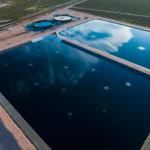
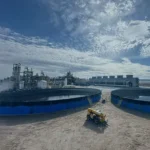
You removed iron, you removed solids, you removed oil. So you have a pretty clean barrel. It sits in our treated produced water ponds, looking pretty clean typically and clear.
So what we’ve been able to do is leverage our scale and provide that as a very valuable resource to our mineral extraction partners. And that’s been, we have three partners on the lithium side that were signed up with, and each has like an area of attack across our portfolio. I think doing that fairly deliberately, given the strengths of our different partners, but also just trying to commercialize this as fast as possible. And then on the iodine side, similarly, we recently announced a partnership with a technology and operating partner of ours to also extract that mineral. And it wouldn’t be possible if we didn’t recycle water. It also wouldn’t be possible in some cases, if we weren’t a broader than the Permian player. So we’re really excited also about how the mineral space will mature.
I think it’s quite a unique new piece to Select.
Mike diving into the data center front and opportunity set a little bit more, can you maybe talk about what we’re seeing for data centers and their water needs in different ways water plays a part in what they do?
So currently what are we doing today? So right now we actually are serving hyperscalers directly. Like we are helping them secure water for dust control and cement manufacturing. So we are literally on-site right now.
We will go out and we will step test existing ag wells as needed. We can drill new wells, we can replace pumps, like basically creating the water that is the lifeblood of the early phase of these projects. So it’s not the long term water supply contract I’m necessarily looking for, but everything you can do in this space to de risk projects, we can treat the water, make it clean and supply that to a data center. And we can do that for, if they’re using more of the mainstream technologies around cooling the data center itself, or if they have power generation, like combined cycle, big power generation that does require some water.
So we are seeing that. I will say generally the trend is to be very, very, very minimal on water consumption with cutting edge data centers. And so we’re approaching the market, not just data centers, but what we’re seeing is a trend towards, well, gosh, I’m a data center site, I’ve got power, I’ve got gas, I’ve got land, what else can I do here? That’s growth and diversification.
And I think where we draw the line around what’s too far afield, I think we haven’t found that yet. In the municipal and industrial space, what is that?
At the core of what we do is we procure, store, treat, move, contain water.
We’ve been doing that since the history of Select and the origination of Select. And that has application in a lot of other industries.
Some of those industries have different flavors to them, contract tenures that are thirty years plus, margin profiles that might look different than our conventional business.
I think those are opportunities we expect to continue to pursue. Of course, we have the Colorado project that is public that we’ve discussed. And I think as we look ahead, there’s opportunities that exist in other basins and that multi basin presence definitely allows us to look at growth a little bit differently, especially as you think about New Mexico growth and build out mature, but we have a lot of avenues of growth we can pursue.
And that’s why we’re chasing municipal and industrial customers, again, a different angle like we did with recycling, chasing them with a different operating model that we think solves a problem of theirs, and also exposes us to different markets and different economics, different stability.
It’s very exciting. Granted, it’s a lot of work and it’s a lot of new, new, new, new, which I think takes time and takes some patience and also takes some courage in the market. But I know we can get there because I know the people that we have at Select, the engineering talent, the operating talent, the commercial talent. And I think that’s the cocktail that it takes and the recipe that it takes to do so much new within a company that’s been around for twenty years.
And I think that’s exciting that we, leaders within the company get the opportunity and the latitude to explore so much new. And I think that’s really incredible. So Garrett, I know we’re getting here towards the end of our time.
Thanks a bunch for spending the time with us and excited to see what we have in the future for Select. How can folks learn a little bit more about Select and keep tabs on what we’re up to?
If you wanna hear about more what we’re doing and keep up with Select, you can check out our social media content or check our website out at selectwater dot com.
To our podcast audience, these presentations hosted by Select Water Solutions, Inc., referred to as “Select” or the “Company,” including any associated discussions, documents, or materials are presented for informational purposes only and does not constitute professional advice or consulting services. The opinions expressed during the podcast reflect those of the individual presenters and do not necessarily align with the views of Select or any affiliated oil and gas entities. To the fullest extent permitted by law, Select, its agents, and experts disclaim liability for any damages, losses, costs, or expenses—whether direct, indirect, or consequential—arising from your engagement with the podcast or related materials, even if due to negligence. By accessing this content, you acknowledge that it may contain inaccuracies, is subject to change without notice, and is intended solely for your general use.