
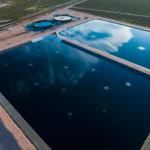
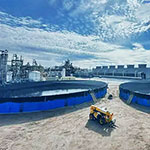

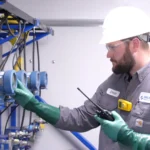



What does it take to ensure safety, competency, and continuous improvement across a global wells function? In this episode of The Water Exchange, Cristina Williams is joined by Matt Bolen, Senior Manager of Wells Excellence at Chevron, for a wide-ranging conversation on the technology and talent shaping the future of completions.
- Tune in as they discuss:
- Extended lateral technology and the chemistry behind longer, more efficient drill-outs – Produced water reuse – AI as an efficiency multiplier, not a job eliminator
- Rising natural gas & data center demand
- Sustainability, safety, and Chevron’s ever-cleaner energy mandate
If you’re working in completions, water management, or just want an honest operator’s perspective on where the industry is headed, don’t miss this episode.
Full Transcript
Welcome everybody to The Water Exchange podcast. My name is Cristina Williams and director of corporate sales at Select.
My name is Matt Bolen. I’m with Chevron, and I’m senior manager, Wells Excellence.
So can you tell me what is, what is the Wells Excellence Group at Chevron?
Yeah. So the Wells Excellence Group is we’re responsible for providing the skills and competencies, for the Wells function. So that includes a number of different technical trainings, competency trainings, those those type of things, to really help, enable the the safety, reliability, and efficiency of the Wells function. So providing those skills and competencies, to in order to achieve those goals there.
And it is it specific to any particular area of Chevron? Is it for all basins, or is it just driven to completions of production or reservoir? Or what does it encompass?
Incorporates all of Wells. So if you think about shale and tight, deepwater, heavy oil, covers everything, and we cover the whole all of Chevron, and we operate in a number of countries globally, and and we’re we we support all those countries as well.
Wow. That’s, extremely impressive. That must take, like, not only a range of expertise, but, like, a large group of people to do all of that.
Yeah. You think it’d be a large group of people, but, actually, we we do it, with, I’ve got nine nine individuals on my team.
And so majority of them are well control instructors. Well control is very important to what we do in day in, day out. And then I’ve got a l and d adviser, l and d coordinator, and a technologist, and so that comprises of the team. And so, again, yeah, big focus on well control, again, on, making sure that we, that’s kind of like a process safety aspect of of safety to where, we wanna make sure that, where when we are, conducting operations, that we do do so in a responsible manner. But on the other side too is, the part of the that competency as well is in in addition to well control is, things like technical training, and so we rely on a number of our subject matter experts, SMEs, to help deliver that training, as well.
Personal Journey in the Oil Industry
Do you mind sharing with us, like, your story, how you started in the oil field?
Yeah. Yeah. Twenty years with Chevron this year. Worked in a number of locations, a number of, different basins and and asset classes.
Mainly been in, drilling and completions type roles. Taking a couple of assignments kind of out of function, but mainly it’s been in the in drilling and completions. And and here I am today. Yeah.
Thanks.
Most exciting role that you’ve had?
I think I find really value in in all the assignments that that I’ve been in. For example, working overseas, I’ve worked in Nigeria and Indonesia, and those are really interesting assignments. Getting to know the cultures there and then some of the challenges that that are in those areas. A lot of things the US that we kinda take for granted in terms of, being able to access, kind of supplies and and other things, it’s it can be more difficult, especially in kind of remote operations, overseas. So, yeah, so those have been been very interesting. Like I said, I learned learned something new in every role, and I I think that’s what it’s what it’s about. It’s it’s always about, learning something new in the role and that continuous learning aspect of it.
You’ve been at Chevron for twenty years. Is there any advice that you would give to, you know, recent grads or people that are about to graduate from school? Is there any advice that you would give them?
The the oil industry, it’s it’s got its shares of up and downs, and so I think it’s kind of being prepared for the long term and and making sure from a kind of financial, perspective, it’s you’re kind of well prepared for that. There’s, I would say, plenty of financial books out there that can, provide that information. I would say the other thing too is, with any long career is never never stop learning. I mean, like I mentioned, AI is, kind of an emerging technology.
And so how does how can you upskill in in AI? And and, I mean, there’s a lot of aspects to AI, but how can you upskill to kinda keep your skills relevant and your competencies relevant, and apply that, to the job at hand? There’s plenty of learn things to learn about the oil field. Every day, I’m just kinda fascinated by the, the technology that goes into the oil field.
Only a few years ago, I mean, we just said the Permian was started drilling horizontal wells for a long time. It was vertical wells, so that was kind of a new technology that was introduced. And then, and then from there, it’s the fracking’s gotten more efficient. The drilling’s gotten more efficient, and and that that all comes through technology.
And so it’s this this this kind of continuous improvement with and and technology plays a plays a big part of it.
The Impact of AI on the Industry
You mentioned AI. What advice would you give people who are fearful of this technology?
I think we’re just beginning to scratch the surface on what AI can do to to make the companies more efficient and and add value. And and so I I think that that’ll be another, I think, key trend as we move forward through the year. I think a lot more jobs will be created. People are fearful of of of jobs being eliminated, but I think at the same time, though, it it’ll offer a lot more jobs in the future. And also, I think one of the benefits is it’ll make people’s job a lot more efficient. So, I mean, there’s a lot of aspects to AI, but I see it as really an efficiency gain for people working with it.
You think we make better wells with AI? You think there’s a world in the near future that you employ an AI, we make better wells?
Yeah. I think numbers that I’ve seen, I think recall, I think it’s six to ten, eight to ten percent, of the well in terms of recovery. And and so, yeah, I think technology and and I think AI may will have a role to play in that technology. And then I think it’s just not AI. I think it’s, we’re getting getting better with things of, making sure we we place the wellbore in the right location.
We, there are kind of the way we treat the wells in terms of frac designs and also the the chemicals that we pump down, can also increase the recovery as well.
Trends in Oil and Water Management
With all the different trends that we’re seeing in the industry, right, the change from something that’s very particular to Select, you know, the change transition of using more produced water, Is there any trends that you’re seeing in the market of things that will change in the next couple of years?
As we kind of push for, longer and longer laterals, it’s like we the the engineering that goes into making sure that those fluids will work and and enable that coal to reach, TD and be able to clean out all the plugs is, more and more engineering needs to go into that. And so, for example, it’s we’ve done a lot of two mile laterals. And so, with the tools that we have today, very easy to get kinda two miles. But now once you’re starting kinda three miles and and beyond, you gotta look at all aspects of the, the drill out.
So for example, yeah, water is a big, a big part of that. The chemicals that go into the water. So for example, pipe on pipe. So that helps reduce the friction between the cold tubing and the casing.
And so the the chemistry of those keeps getting pushed. I would say with the water, it’s in the Permian. It’s well known that you may depending on what area you’re in, the water quality varies greatly, and so it’s making sure you take that into account, engineering the well. And then also, say, some of the, downhole technology too.
So one of the things with, coiled tubing is some of the recent technologies is around the split string. So, basically, you have an agitator at the end with your BHA. And about halfway up, you install another agitator, and that kinda helps, for those extended reach, drill outs. Another thing too that, companies are offering is a kinda stacked agitator.
So you kinda put one agitator behind another one in in the BHA, and that’s also helping as well. So, yeah, it just continues a lot of more a lot and a of technology, and you gotta look at all all aspects of it. It’s just not the downhole tools. You gotta look at the water, the chemicals that go into the water, and and really understand, what that chemistry is of of the water there.
When you frac a lot, you used a lot of sand. Is there anything particular that you guys have discovered with sand?
Really moving, like I mentioned, to those big sand silos has kinda really helped enable that. We used to use a lot of sandboxes to deliver sand to location, and and now with the the silo system, we’ve been able to move to more of like a belly dump. So, again, it just comes back to logistics. It’s like, how can you get more, sand and water to location, to enable to enable the the triple fracs and the trimble fracs there. Yeah.
Challenges in Produced Water Management
You’re familiar with with what Select does. You know? We’re a water infrastructure company, but we also do chemicals. Right? We’re a the chemistry that goes into completions used in produced water.
Is there any challenges that you’re seeing right now in the industry? Any trends, of things that need to be changed or improved?
When it when it comes to water and and especially produced water, I think a lot of it has to do with the the reuse of it, I think, is a is a big challenge. I mean, the I think there’s an industry, problem with, make it’s like what to do with all that water in in the Permian, and and so making sure that we can, reuse it responsibly. And then there’s know a lot of that goes into treating that water, make it beneficial for reuse.
I don’t know if you remember from the last lunch and learn that we had something that our technology team really likes to convey to customers is when it comes to chemistry and the reservoir, like, every single component matters. It’s not just the water that you pump down, but it’s the water that’s in the reservoir, any completion chemist’s coals that are pumped down, the sand, because it’s also got its own chemical, especially if you’re using regional sands. Right?
So it’s a whole ecosystem of factors that really make a difference on This really just depends on the application of, like, making sure that we we treat the water.
Same goes for frac is making sure that the the the frac water is in spec, to be able to pump that downhole. And and and with that, one of the things that we really look at is that formation damage is, like, we don’t wanna put a pump of water that’s incompatible with the formation and cause a lot of formation damage because then we’ve, kind of defeated the purpose of the of the of the frac. And so what we wanna make sure is that that water that gets, pumped down is compatible not only with the the formation too, but it but it has the characteristics that we need to in order to carry the sand and get it properly placed, in the reservoir.
You work at Brier Park? Yeah. And there is a lot of technology focused around that particular area. What do you think it’s, like, the the the recipe for always innovating at, at Chevron?
Well, I think it really just starts off with a with a with a problem. I mean, some of the technologies that we’re working on is really and as I mentioned before, you have kinda single digit recoveries out of the reservoir, and it’s like, okay. How do we increase that? So there’s a lot of existing kind of oilfield technologies that can be able to address that.
But also there, I would say, there’s emerging technologies in terms of what you pump down into the into the reservoir to help get more oil out of it. And so some of it has to come with kind of physically trying to get more out of it, and some, involves the chemistry as well. And so I think a lot of it is solving that that problem because it’s it’s one of those things to where if you look at a traditional reservoir, you may get up to twenty to thirty percent plus, recovery out of those reservoirs. And so how do we, do the same out of these, shale and tight reservoirs?
And so that’s gonna come with that’s a problem that that we’re trying to solve, and so we’re working on those technologies to try to increase that recovery.
Future Outlook for the Oil Industry
What is your outlook, your personal outlook for twenty twenty six?
My opinion, and and and I think, Chevron’s got their their own opinion and outlook around it, but, just my opinion and and stuff I read and is that, I think going forward for the for the industry, I think it’s we’re probably gonna be in steady state, kind of like what we’re seeing now. I think we’re gonna have kind of lower oil prices, going forward. It just seems like there’s a lot of supply coming on to the market, and the demand, we haven’t seen like a, I would say, material impact on demand going up. So I think we’ll kind of kind of be in in in the range here that we have been in the market, I would say. And then I think the, yeah, the big big story for next year is is around, AI.
There are a lot of, announced data centers being built across the US and across the world. A lot of those, I think, are being proposed to run, like, off the grid, so kind of generators on-site. And so those will need and and natural gas generators on-site, and so those will need quite a bit of gas to run run those data centers. And so I there could there could be a scenario where we kinda see uptick in natural gas prices, but it’s really gonna depend on when those, data centers get built and and they’re online. So a lot of proposed ones, I think a lot a lot are in the works, but it’ll really just depend on when those get completed. And there’s also, the US exports, quite a bit of l LNG.
And I think, from what I’ve read is there’s more, LNG terminals or expansion of existing terminals being proposed. And so those get built that could, definitely be another tailwind for the natural gas price here, in the US.
The what I hear there is positive because even if it maintains the same, I feel like there is a lot of stability in that. Right? And stability is something that our industry needs for all of us, not just service companies, but operators as well. Right?
It gives people the confidence to invest. Right? It gives, young career people to, hey. I really would like to go into the oil field, that confidence to do that.
Regulatory Influences on Sustainability
Is there anything regulatory wise that has been driving, you know, operators like Chevron to be more sustainable?
Yeah. So no matter where we we operate, we operate within the local regulations. And and so depending on where we operate a number of countries, including the US and a number of areas in the US. And so depending on those local regulations, it really drives what we do. Local regulations are ever changing as well. It’s like we may have a regulatory environment that lays out what we have to do today, but they’re always working on other kind of regulations that we may have to adapt to in the future, and so we will adapt to those as well.
How do you feel about sustainability?
Yeah. When when I think in terms of sustainability, it’s it’s really it kinda goes back to Chevron’s priorities is around creating it’s having affordable, reliable, and ever cleaner energy. And and so in in terms of that is, we always looked at technologies to, reduce our reduce our kind of impact in terms of emissions with our operations. So for example, we’ve got a solar farm out in West Texas, and that’s helping us run our run the production operations, all the equipment that’s gotta do to produce those wells. So it’s you we’re always looking at at technology, and then, actually, Chevron has a several venture fund venture capitalist funds that use to make investments in technologies that can help us achieve that ever cleaner providing that ever cleaner energy to the to the world.
Is there something that you have seen that you think there is opportunity for innovation on the coil side?
Yeah. I I think really the the limiting factor, you gotta overcome that friction. I mean, you’ve basically got a a small pipe laying on the bottom of the, of the casing there in these extended, laterals. And so, really, it it comes down to that that friction overcoming that friction.
And so there’s industry term called pipe on pipe that helps reduce that that friction. So that’s that’s chemistry involved in that. And also, I’d say too with it is making sure to with the longer laterals is being able to clean the hole effectively. So when we the process of drilling out is you’re drilling these plugs and you got plug parts and then sand you may have sand left over from the frac and the wall bore, and it’s like, how do you, again, kinda create that that water chemistry to be able to accommodate all those things?
So it’s not only reducing the friction, but you gotta have the the fluid be able to carry out the plug parts and the sand out of the out of the well as well. And so when you get kind of these longer laterals, it’s it gets kind of more and more difficult to to achieve that. So that’s, I think, where the technology is coming into play.
So on on the same side of, you know, coiled tubing applications and it being completions, drilling is another one of your backgrounds.
Is is there a lot of similarities? Is that one, can you carry some of the skills from one to the other?
Yeah. I I mean, a lot of the the principles are the same with drilling and and on the drill out. We typically use produced water. You don’t wanna have a lot of, other things in there because you you’ve you’ve just finished fracking the formation, and you wanna minimize that that wall wart damage.
For example, on the on the drilling side, you wanna make sure you have that kinda hydrostatic pressure, for well control to make sure that, you’ve you’ve got that in the well. And then also, you wanted to have to where you may be drilling through clays, and so you wanna be kinda you want the, fluid to be kind of inhibited so you don’t kinda swallow clays and stuff like that. So it just depends on really kind of what what characteristics you’re going after. And so a lot there’s the way we kind of measure, fluid properties is is the same, but it’s it’s really the additives and everything else you put into that fluid are different depending on the application.
Safety Practices in Operations
So we talked about sustainability, and hand in hand to sustainability is safety. Select is really big on safety. We internally use SRP as the program to how do we incentivize our, employees to remain safe throughout the year? What does, what does Chevron do?
Really, at the end of the day, we want everyone that came to work that day to return the same one that they came, because it’s important for them to go back to their families.
And and I think everyone coming out out to to work, no matter if it’s in the field or the office, once once they come in, do a great job, and then return back to their families, and and we wanna make sure that they return the same way that they came.
When you look at efficient operations, they’re they’re safe operations as well. And so if you’re if you’re really driving that that safety, you’re have those efficient operations as well because they they go hand in hand.
We like to think of it in the hierarchy of controls, and and the first one is really engineering out the the risk that we face in our operations. And so if we can find a way to engineer those out, then that’s that’s the best outcome that we can have because that means that no matter what the individual is doing, it’s engineered in such a way that they they can’t get hurt from whatever that specific thing is.
So, yeah, we we we take it very seriously. We we talk about it a lot, in our in our day to day operations, and that goes, all the way, throughout the throughout the company.
I’ve known you for a long time. And one of the things that, you know, like, aside from everything that we’re talking here, right, sustainability, safety, those are things that, you know, we carry to our personal lives. Is there something that, you know, that you particularly do at Chevron that is unique? I remember you talking about do I guess, doing presentations on finance or investing in your future. Would you like to tell us more about that?
Yeah. Sure. I’d love to. And and kind of disclaimer, I’m not a a financial professional.
So anything that I mention or whatever, I would seek the advice of a financial adviser. But, no, happy to talk about that. Yeah. For me, it’s just one of those things to where I I’ll kinda take a take a step back to where, when I was in college, I was on the, swimming and diving team at Virginia Tech.
Actually, I was a diver, so that really kinda occupied a lot of my free time. But then there’s not a lot of people that go professional in diving, and and so I really just got into reading financial books. And then when I got to Chevron, I was just very interested in kind of continuing that. And so I was able to take kind of the information that I learned in Chevron about their benefits in terms of four zero one k and those type of benefits and educate others around that.
And so what I’ve been doing probably for the past, I think it’s six or seven years now, is I kind of put put together a presentation. I do it every year on maximizing retirement benefits. And so it’s just really trying to educate people on really how to use those benefits at Chevron to maximize how to maximize their retirement benefits there. And it tends to be I give a lot of presentations on a lot of different things Chevron, but that one tends to be the most popular because people were like, wow, I didn’t didn’t know this existed, and I’m able to do this with kind of my retirement benefits.
So, yeah, no, just have a real passion around teaching people about things and especially in the in the finance space.
So Wonderful.
Well, Matt, it has been a true honor and pleasure to have you here with me telling us your story, telling us what you think it’s important. Thank you for being here.
Yeah. No. It’s been a pleasure, and I appreciate the conversation and and talking through all these things. Yeah. And I really, really enjoyed the conversation. Thank you.
Thank you. Well, for all of these you guys listening at your homes or on your way to work, I really appreciate your time. If you would like more information, please, go to Select Water dot com.
To our podcast audience, these presentations hosted by Select Water Solutions, Inc., referred to as “Select” or the “Company,” including any associated discussions, documents, or materials are presented for informational purposes only and does not constitute professional advice or consulting services. The opinions expressed during the podcast reflect those of the individual presenters and do not necessarily align with the views of Select or any affiliated oil and gas entities. To the fullest extent permitted by law, Select, its agents, and experts disclaim liability for any damages, losses, costs, or expenses—whether direct, indirect, or consequential—arising from your engagement with the podcast or related materials, even if due to negligence. By accessing this content, you acknowledge that it may contain inaccuracies, is subject to change without notice, and is intended solely for your general use.