
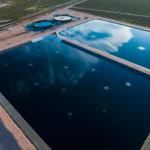
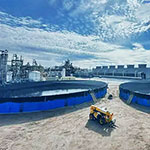
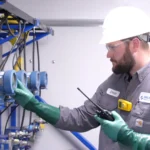



In this episode of The Water Exchange, Danny Grant and Bryce Reed take listeners inside “The ROC,” Select Water Solutions’ remote operations center in Gainesville, Texas.
What started as a monitoring system has evolved into a centralized hub overseeing thousands of assets, hundreds of facilities, and real-time water movement across the United States. Powered by AquaView, Select’s proprietary platform, The ROC transforms massive volumes of data into actionable insights, helping teams prevent issues before they happen, improve safety, and deliver water exactly when and where it’s needed.
Danny and Bryce break down:
- The evolution from manual water transfer to fully automated systems
- How Select manages 7,000+ active assets in real time
- The role of AI, cameras, and SCADA in proactive operations
- Why customers are demanding more data—and how Select delivers
- How automation reduces NPT and improves reliability at scale
Who should listen:
Completions and frac engineers, water midstream and infrastructure teams, field operations leaders, and professionals exploring automation, SCADA, and real-time data in water management.
Full Transcript
Welcome everyone to this edition of the Water Exchange podcast. I’m Danny Grant, vice president of enterprise platforms and cybersecurity for Select Water Solutions. And today, I have with me Bryce Reed.
Hey, Danny. It’s really great to be here. As Danny said, I’m Bryce Reed. I’m vice president of water transfer and frac automation here at Select, really focused on the automation side for executing water transfer projects across the United States.
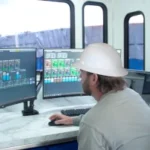
And Bryce, we’re in a new location today. We’re in the ROC in Gainesville, Texas, and this is a live working command center. So folks, I apologize if you hear some noises. These employees are actually working in here, so you may hear some some extraneous noises, compared to our regular podcasts.
Yep. Excited to be here with this major showpiece. As you said, remote operations center, it’s really become the hub not only for water transfer operations across the United States, but all of our service lines. So we have disposals coming in, we have pipelines, we have recycle facilities, and this is kind of the neural hub for all that information to come to, to ultimately commingle and have oversight over it.
Acknowledging the Team Behind AquaView and the ROC
Now, neither one of us sitting in the driver’s seat for owning AquaView or the ROC. I mean, that was built by or run by Nate Banda and his team of really smart engineers. We just get to see the benefits of it and get to talk about it.
Yep. Yep. It’s been a huge team effort overall.
With this needing to oversee the entire company, you really need somebody that has a broad depth of knowledge, both across what products have been deployed in those other business units that could really bring it together to not only build this place out to manage the scale and capabilities that we need, but to just envision overall what needs to come in, what’s important to take action on in the screens and alert to.
Nate and his team did a did a excellent job on that. You know, one thing when I either watch a pod or listen to a podcast or maybe watch a YouTube video about people describing new services or new products, sometimes you can kind of hear all about it without really understanding the scale of what you’re talking about. Are we talking about something that’s in minimal phases of adoption? You’ve got a couple of test units out.
Asset Management in the ROC
So really wanted to touch quick on the scale of everything that’s coming into the remote operations center, and thus what Select is doing in the field, just so you and the listeners kind of have a context for what amount of information is really flowing through here. So, you know, visited with our SCADA wizard, Charles Schultz, before we did this podcast just on, you know, how many assets are we really overseeing in The ROC on any given day? It was seven thousand two hundred. So Assets.
Seven thousand two hundred assets that are in our database across all the different lines of business that we do. And not all seven thousand two hundred of those may be in use on any given day, especially when you talk about water transfers business and how it’s constantly in a state of rigging up a job and then executing and then rigging down and just completing that cycle, you’ve got probably seventy percent of the assets in that business unit are online any given day.
So it wouldn’t surprise me if it’s five thousand five hundred, six thousand assets that are That’s crazy.
Reporting into essentially the room that we’re sitting in.
And then they’re monitoring for our physical sites, what, two hundred plus physical locations and eleven hundred cameras? Yeah. I mean, those are all run through this facility in addition to the jobs. It is. So we’re talking I mean, that’s thousands. I mean, five thousand assets, six thousand active assets, two hundred facilities, eleven hundred cameras.
Data Management and Oversight in the ROC
Yep. It’s a ton of data. It’s a ton of jobs. It’s a ton of activity. And, really, I think that speaks volumes to what the team has done to be able to condense that down into a facility of this size, you know, where we have trained skilled personnel in here overseeing everything.
And the magic, you know, I almost think out of of not so much as the build out of the room, but we’re taking all that data and getting to the guys what they actually need to see on the screens that would be of concern to them, of concern to our operators in the field, of concern to our customers so that we can ultimately take action on what matters most.
And and that’s a big change as well. Right? You think about the old the old command center, it really was just watching a job happen. Yep.
Yep. Well, now we’re actioning things. They’re it shows up on the screen in red if it needs an action taken. These guys are catching spills before they become big deals.
Technological Advancements in Monitoring
They’re catching potential hazards. I mean, it’s it’s amazing where the technology’s come in just a matter of four or five years.
Yeah. I almost think of it as focusing on a dartboard. So before, you had to be watching the right thing at the right time to catch something. Now we’ve kind of condensed it down to that bull’s eye to look at either the most, you know, most concerning aspects from an environmental standpoint, from an execution standpoint. Where where are we at risk and how can we use the data coming off the assets in the field to tell these guys, hey, where are we at risk and you need to pay more attention to me?
And it’s not just what’s on the screen. I mean, guys all have individual monitors where they’re little multiple monitors where they’re watching things. I mean, they can, what you see on the screen isn’t everything that they’re watching. They can be watching other specific things that are going on. Maybe they get a call from somebody, Hey, could you watch this for me? I’ve got to go do this or whatever. So they can be very focused as and a force multiplier for our field resources.
Yeah. I think that’s a good point. So really our eye in the sky on risky assets or maybe riskier things that we see happening right now in the field or that the SCADA system sees happening, but also direct support for the field.
Direct Support for Field Operations
You know, can call in and ask, hey. I’ve you know, I don’t have or text in. I don’t have that great a cell service to, get an internet connection per se. Could you tell me where this flow rate is or where this pit level is? And also, have some direct actions being taken. So on some of our lower rate transfers, kind of drilling rig type support, a lot of the requests for water to start those equipment sets up and ultimately transfer water to rig locations, they run through here. So that’s a phone call away.
That’s really cool. I didn’t know that actually happened. I still thought that was all done in the field. And that’s at the customer’s demand, right? Absolutely. So we can move water on demand when the customer calls, when they need it, where they need it.
Yes. Customer can call us in the field, maybe our field rep calls up here and we turn the line on or customer has a direct line to appear to turn it on and off.
It’s really convenient for That’s very cool.
Future Innovations in Monitoring Technology
I mean, the advances we’re doing in this facility are amazing. I mean, we’ve got cameras. We’re looking at AI. We’re looking at how we can use AI to detect, are people in areas they shouldn’t be?
Are people not wearing hard hats? I mean, those are all things that are coming. They’re not there yet. I mean, the cameras have to get there.
We’ve got, like I said, we’ve eleven hundred cameras. We’re deploying more and others guys going out to the field next week to get cameras on our treatment facilities where we’re adding as a second player, right? I mean, we’ve got sensors, we’re reporting them into SCADA, but now we’re gonna start using cameras as an extra set of eyes instead of having a guy having to go out there and touch it.
Yeah. I think it’s really invaluable, especially when you talk about the cameras of being able to see places that maybe we can’t have sensors.
You think through the weather events that we had early this year, you know, a lot of snow, a lot of buildup, and a lot of these secondary containment containments on-site. Well, having a camera there, I mean, it’s it’s a huge time saver. You can you can log on or these guys can let us know where where we need to be emptying out.
Improving Efficiency with Remote Monitoring
Containment may have some environmental concerns instead of driving around all the sites, you know, two hundred sites checking secondary containments, we can dispatch remediation directly from In an ice storm, right?
I mean, this is getting guys off the roads when they don’t need to be on the roads and really targeting again, like you said, the dartboard, right? It’s not, I’ve got to drive to all these facilities and wonder and check. Maybe they have something. Now we can know and say, hey, this one you need to go check.
Excellent point, not just a convenience factor but a big safety factor there as well.
All this is based off of our AquaView platform, right? Mean, that’s been around, AquaView has been around for a while and we’ve gone through multiple iterations. I haven’t seen all the iterations, but you were here from the founding of AquaView.
Yep. Yep. And to put it in the most broadest sense possible, AquaView is kind of our total water management and operational control system. What it really does is allow us to know where the water is, how much is there, and to move it wherever we want at a specified rate.
Evolution of AquaView Features
So that’s kind of our term for the system as a whole.
It has come a long way. When we originally rolled out AquaView, it was nothing but pit volumes online, some meter volumes. Then we started to build out the automated water transfer side, and that involved to looking at frac tank levels on location, looking at AST levels on location.
We had the pumps on there. We could remotely change settings on the pump for our start and stop set points on the automation side.
It has evolved into an amazing overarching product that, you know, is the mirror of here. So you could say this this is essentially AquaView that we have in the remote operations center here.
Yeah. It it has evolved quite a bit from the early days.
Managing Produced Water with AquaView
And and you talked about the water, right? We talked about it was it was ponds, it was pits, but now we’re talking even produced water, right? Or treated produced water. We’re able to take that treated produced water and transfer it to where it needs to be instead of fresh water or pit to pit or something like that. We could say, okay, well, we’ve got this We need to get this produced water to one of our disposals or our treatment facilities and then recycle it and reuse it again. We can do all that through it’s all that’s done through AquaView.
Yep, yep, correct. Lots interconnections there, not only internally with Select on moving that water, whether it’s through permanent infrastructure or temporary pipe that may be put in place, but a lot of tie ins to third parties as well on that side.
So And customers.
Customers, can can they see AquaView?
Yep. Absolutely can. So anybody that has either water transfer with us or we’re partnered with on a recycling site can log into AquaView dot com and essentially see what our operators are seeing in the field and a good bit of what our operators are seeing here in the remote operations center, they can see that live.
That’s cool. And it’s just for them. It’s just for their jobs. They can’t see everybody’s. They can see their jobs only.
Just for the one way communication. You’re not going to accidentally click a button and turn a pump off or on. It’s just a live view.
Company Evolution and AquaView’s Role
That’s cool. That’s very cool. So Bryce, we’ve talked a lot about where we came from with water transfer. And I think it’s fair to say that not only has AquaView evolved, but the company’s evolved, right? I mean, we had a few disposals before, we had maybe a treatment facility or something, but now we have, I don’t even know how many disposals, how many treatment facilities. And so, I mean, we’ve gone from just statically looking at stuff and talk a little bit about what we’re doing now. I mean, you’re a lot closer to that than I am.
Yeah, I think that’s where the involvement of AquaView has really been key. So we started from a point of just monitoring water sources, integrated transfer and control in there, and now it’s evolved to interconnect into our disposal and pipeline systems. And really, it’s kind of mapped out as one neural network, if you think about it. We can take either operator derived inputs of where we want to move water and when, or we can set the system to balance the water where we want it moved and when.
Adapting AquaView to Customer Needs
And it can get it there when we need it, when the customers need it. I mean, it’s really it’s amazing how much not only the company’s evolved, but how fast AquaView has been able to adapt and change with us as we’ve grown.
Yep. Yep. It is an impressive product for sure and one that we’re proud of. We really are.
I feel like we’re doing things in the industry that nobody else is doing on that side, and and maybe outside of the industry as well. You know, we talked a little bit earlier about the number of assets we have in here. That is an enormous amount of tags and pieces of data, over over a million. And there’s just not a whole lot of systems out there that could not only process that data and store it, but could actually take action on it.
Well, and even if they are, those are stationary facilities. Our stuff is rolling down the highway. It’s moving from site to site to site. It’s not a hardline connection.
These things are using, not to get too technical, but virtual private networks, right? Mean, they’re using cellular to talk to our SCADA system and you’re comparing I mean, we’re looking at other facilities that they’re stationary, they’re never moving, nothing changes. Maybe they do a remodel. Our stuff changes every day, every job can change.
Yeah, that’s been great on the disposal pipeline side, having that permanently in placed equipment. I mean, that’s just beautiful. Talk about a life changer. But to speak to the transfer side, Boor, you are correct.
Challenges of Mobile Equipment Management
This equipment moves every one to three weeks, call it, is probably a good average number. And when you move it, you are not only moving it to a completely different location, but the combination of individual assets is going to change. It’s going to be different pump counts. It’s going to be completely different pumps.
It’s funny you bring that up because I’ve gone to some industry conferences and tried to talk to some of the manufacturers and SCADA programmers and integrators. And when we try to describe what we do of having mobile assets that, for lack of a better word, constantly move and we need to put them together into a job on the fly, I mean, it’s eye opening to them. We’re talking to guys that build out factory automation, you know, very industrialized stuff that you said it once, it doesn’t move. All you have to do is maintain it. And the way that we’ve gone about it, so having to constantly move the equipment, having to regroup it into new jobs, we needed a way to do that quickly. I mean, we’re at a scope of between on the temporary side between fracs and water transfers, probably one hundred and twenty to one hundred and eighty unique sites on any given day.
Job Management in a Dynamic Environment
So those are sites, not the pieces of equipment?
Correct. Just sites. Jeez. And so if you’re turning those over every week to every three weeks, we have to build multiple jobs a day in the SCADA system and lay out multiple P and IDs a day in the SCADA system.
And I don’t think that can be overstated, the versatility that the SCADA team has built in to do that versus outside the industry where or I guess just in a more permanent emplacement where you would have an engineer doing that. You would have a electrical mechanical SCADA engineer building out that site as they programmed it, and then it is what it is. It’s not changing. Yeah. We had to come up with something much more flexible, much quicker.
Efficiency in Job Setup and Execution
And it really is amazing to see these guys build these jobs in a matter of thirty minutes and lay out a P and ID That’s crazy.
With correct relationships between water sources, flow meter, pumps on the line, blending units, you know, tank control on location.
It it’s impressive to watch all that come together and function and have it be such a refined product that anybody in the world could run one of these water transfers. We’re able to lay it out in a manner on the screen that it’s so intuitive that the employees here in The ROC needed to run the water transfer. They could look at the job on the screen and have knowledge of it as far as the relationships between the assets and run it just fine.
And that’s what we tackled first.
I mean, think about it. That was the first thing we as a company, we tackled the most difficult thing you could ever think about. It’s not stationary. I mean, that’s amazing. It really is. So I mean, the other stuff is not easy, but it’s kind of easy compared to, I guess, the way they built the foundation has made it so easy for us to use.
Continuous Improvement in Operations
Yep. Start started from a challenging point first and I wouldn’t say it’s been coasting from there.
It’s always we’ve got a big team, we’ve got a skilled team and we’re, you know, we’re constantly working on improving, but yeah, they definitely tackled the hard stuff first.
That’s amazing.
So, Bryce, think about the the the way the the the water transfer jobs of the past and where we are today. Do you think there’s any way we could do that with the manpower we have if we didn’t have the ROC?
No. Not not without the manpower side. I mean, if you think back to the early days of water transfer, Barnett in the Haynesville, we were running aluminum pipe. We didn’t have any engineering on where to put pumps. There was certainly an art to executing large water transfer jobs back then.
A lot more than science.
Yeah. Yeah.
A lot more than science.
The Art and Science of Water Transfer
It was a little bit of art and a little bit of luck. It’s kinda like a kinda like a Jackson ******* painting. It was it was beautiful, but it was chaos at the same time.
We had to be very careful how we pumped jobs. Lay flat to some extent made that easier. We didn’t have to worry about sucking pipe flat and changing out a quarter half mile of pipe in the middle of a job. So that made things a little easier. But where automation really played in on these huge jobs that have so many touch points now, we’re running water so far, multiple sources, very high rates.
It, it it would take significantly more people to execute those jobs in the field, either without automation or without the oversight that The ROC provides.
Optimizing Workforce Management
Nope. Nope. Because we we want to be able to run those jobs with as few people as possible so that we can take the employees that are displaced off that job and go do one or two extra jobs that maybe we couldn’t do before, which is what we saw in the early days, you know, of automation.
Just flat out running out of people.
Yeah. Adoption can be tricky on stuff like that. I think anytime you have a fundamental shift in the way something is gonna be done, I don’t know if resistance would be the word, but maybe just leery of adoption.
Yeah, hesitate. Mean, you’re going to be.
Yeah, we crossed some of that with our customers. I would, you know, it was a range of reactions to it. I think we had the customers that jumped on it extremely early, wanted everything that we could give them and wanted more than even we had at the time and participated in the development of new products with us, which was really impressive.
That’s cool.
Customer Engagement in Product Development
Yeah, it’s not something that you see a lot.
We also had, I’d call the middle range of customers that were interested in tank monitoring so tanks didn’t overflow.
I wanted to get guys off the tanks. That’s always been tricky having guys on on tanks.
It’s not a Dicking them?
Yeah.
It’s not a super safe position, little precarious.
A lot of the manual measurements, were just subject to failure, you know, sight glasses, floats, stuff like that. So that that was really enticing to a lot of our customers. And we were interested in the safety side of it for sure. You know, pipe pressures not blowing up, lay flat hose, that that was very That was looked at as a pain point by our customers. So automation really helped those guys in the middle have a higher confidence in the job execution.
Safety Improvements through Automation
And then to be quite honest, we had a lot of customers that were just agnostic to the automation. They were worried about having water in the tanks when they needed it and what method we used on our end to get there.
Like I said, they were somewhat agnostic too. What we found over time is the KPIs of not running tanks out of water, just general uptime availability of our services to the frac crew, those customers that were agnostic on how we accomplished it, they saw to see our performance separate from competitors that weren’t using it. And all of a sudden, that agnostic viewpoint turned into more of a mandatory must have.
So they saw the value in the NPT, the elimination of NPT. Nonproductive time, right? I mean, we’re able to get the water where they need it, when they need it without having to worry about, I’ve got a guy with a broke down truck or something like that.
Business Continuity and Backup Facilities
So they became adopters of it and embrace the technology. Hundred percent saw the dollar signs and the savings on the frac crew.
That’s amazing. And, you know, we talk about the ROC here in Gainesville, but what if something happens in Gainesville? We do have another facility where we can roll people to in Midland, Texas. I mean, is really pretty cool that the amount of money we’ve invested to build out these two facilities really shows the investment, the leadership in this company has the trust in what we’re building, how we’re leveraging it, and the value it brings to the organization and our customers.
Yep.
And would you look at the scope of what we’re handling here and kind of moving towards a utility class, you know, company or control center Yeah.
However you would phrase that. A a backup, a backup station or a backup location is something that’s gonna be necessary at one point in time. So I know you were involved with that a lot, helping out the initial layout of the facility in Midland just there north of downtown. Not something that’s fully staffed at this point.
You know, as we are growing from, like I mentioned earlier, over seven thousand assets to probably over nine thousand by the end of this year, that we could look at staffing that. You know, there’s going to be a lot of decisions that go into that. But we do have a good pool of people out in the Permian that if something were to happen in North Texas and we had access concerns to this facility for safety reasons like weather, you know, extended power outages, which we have multiple backups in place, but you just never know. Yeah.
We do have a good pool of knowledgeable people out there that do this work every single day in the field that could come in and help out.
From That gives us a business continuity. Right? You always hear Doctor, business continuity. What does that mean?
That’s what that means. It’s a warm facility. It’s fully ready to be turned on. It’s got the connectivity.
All you have to do is put the people in there. And again, the way we’ve built this, if we can’t get people from here, we have people in the Permian Basin who could go run those from there for us.
Yep. Absolutely. Great employee base out there. We don’t even have to staff the backup ROC out there full time. We can pull people straight out of the field and plug them in.
That’s very cool. That’s very cool. So Bryce, we talked a lot about our customers and their adoption. How about our employee adoption? How’s that gone?
So the internal adoption was multifaceted. I mean, that’s a heavy lift to go from a company of our size, the way a historical service has been done, and just fundamentally change it, how it’s executed in the field.
There were several aspects in that. I mean, we had to identify the best targets for it to start with that gave us the best chance of success or most impactful to us or our customers.
And then about after that, it was large scale equipment builds.
We had to do testing, retesting. We want everything to be perfect when it goes to the field. So we’re taking the troubleshooting of capabilities responsibility off the field and covering that on the front end before equipment gets deployed.
I would say training was probably the largest aspect of it.
Retraining in the field to use automation, deploy it where it makes the most sense, and ultimately execute and continue to support it, that’s that’s retraining of a lot of employees. And that that was a lot of our initial focus by the team. We got to the point where we had a in person training facility, you know, before hate hate to bring up COVID. You hear that all the time. Before COVID hit, we were actually bringing new hires from across the country into a training facility in North Texas where they could get exposure to the equipment, how to operate it, basic troubleshooting.
That transitioned away as some of the business overall transitioned away after COVID and really required a focused shift on, hey, can we decentralize the training?
So specifically, Northeast guys, a little shout out to Aaron Taylor and his whole team up there, pioneered what we call our transfer technician training, which is online based through one of our learning and safety systems that we have here at Select. It really jumpstarts anybody on understanding the automation and how to work on it.
You gotta get me set up for that training.
I’d love to take that.
I really would. Let’s do it. You know, funny story. It’s sitting in my inbox right now. I’m I’m scared to take it because the guys are gonna see the results.
Might have to have a cheat sheet with me.
So that, that that was really instrumental in being able to push wide widespread adoption quickly.
And now people just I mean, they expect it. Right? Our employees expect it.
Yeah.
What do you what do you think new hires are coming from other competitors that come work with us? What do they think about it?
Oh, they think it’s super cool. Really? I’ve heard it I’ve heard it likened to playing a video game. So running running a water transfer at Select can be like playing a video game sometimes.
That is so cool. And, you know, you talk about this training program that really is, and I think you mentioned this earlier, utility class. I mean, you see this I think what we’re seeing here, you’re not gonna find a municipal water system that’s done like this. They still have bodies everywhere. I mean, this is getting to a utility, a power generation, a a huge companies like that type of facility.
Positioning for Future Opportunities
Yep. It’s it’s really impressive. And, you know, from where I sit, I’m curious to see what kind of doors it opens up as we kind of move into the municipal space and all of the certifications, you know, that we’ve had to meet with this facility and how that interplays over.
I think it positions us well. I really do. I agree.
So, Bryce, we we’ve got we’ve got customers viewing AquaView AquaView. Right? They can they can view it real time. They can see what’s going on. In here, we have tons of data. I mean, right? Talking five thousand assets, cameras, facilities, tags, millions of tags.
Are our customers asking us for this data? What are they seeing? What kind of data are they asking us for today in the environment?
So I think we’re seeing that request for data sharing ramp up both as the industry evolves and Select evolves with it. We’ve, for a long time, done some basic SCADA integrations with our customers, with operators, to provide them their water level data in pits or ponds or provide them flow meter data. What what is interesting that we’re starting to see now is two things. So as we move into long term pipeline contractual commitments, there’s language already baked into those agreements. You know, there’s a change of custody happening there with that water. There’s dollars associated with any discrepancy there on that change of custody.
Long-Term Pipeline Commitments and Data Needs
So we are seeing, you know, requests to share data there on flow meters, seeing requests to share data on available pit space. So a lot of this is commingling of water. We’ve got water coming in from different customers and going out to other customers once it’s treated. They need to know when they can send water and when they can if they have to redirect.
So that’s that’s not just on transfer. That’s our treatment.
That’s where that that neural network That’s where we’re ties together.
Yep. All plays in together. And another interesting industry trend that we’re seeing on the data side is the emergence of kind of third party data integrators. So you see that a lot around the completion space. So they want to integrate different services on location from frac crew to wireline to the water transfer side.
We we have seen some of that, and we’ve, you know, worked with some of those companies. And I’m curious to see what that brings in the future. I’ll give you one example, you know, because you’re probably thinking, what are they gonna do with all this data? Like, how much do they actually wanna see either in the office or in the data van? Well, one specific instance was really neat where not they were they were looking for just a go or no go signal from water transfer.
Innovative Data Solutions for Operations
So instead of just looking at the water transfer tanks and knowing that there was water in there that could they could start the stage, they wanted to know that the rest of the water transfer setup supplying those tanks was ready to go and kick that supply on.
Oh, wow.
So instead of them trying to ingest pump data, is a pump offer on, are we seeing discrepancy in flows, we just provided a go or no go, essentially checkbox. It’s a it’s a black We’re ready. It’s a green light or it’s a red We’re ready to go. And I’m interested to see where integrations like that go in the future, especially you see the news, you know, from Halliburton about their new automated frac crew.
It’s challenging how often service companies get changed out on location and in different combinations with each other.
But I think it’s going to be interesting to see once somebody establishes either a communication protocol standard or the third party integrator takes that on to standardize everything to see how you can have non competing services on location that have fully automated setups start to intertwine with each That’s very cool.
That would be very cool. Outside of the automation, right, we talked a lot about the ROC, the automation. What do you think the most the the biggest other thing we’ve done that’s made an impact to water transfer?
So from a non automated perspective, I would definitely say the Tidelined hose.
There is a large number of manufacturers of hose that supply it to the United States.
Not a lot of quality control that goes along with that we saw in some of our destructive testing that we did on both brand new hose and hose that had produced water ran through it also produced water with high concentrations of bleach that shouldn’t be in there, but it is something that we see from time to time. And that’s really what led to the development of the Tidelined hose that is chemically compatible and specific to produced water along with produced water treatment chemicals that are often found in it.
And we built that ourselves, right?
We did.
Had a PhD engineers, chemists. I mean, they work they partnered with multiple vendors to manufacture it to find the right ones that would meet all of our specs.
Yep. And it wasn’t just about finding the right hose. It was about finding the right core chemicals to construct that hose with. So this wasn’t just a hose testing process of what is out there and what is the best available option. This was, Okay, let’s test the hoses for burst pressure, and let’s find the absolute best chemical composition for the inner lining of this hose to be compatible with produced water and commonly seen chemicals.
Chapter
Impact of Tideline Hose on Operations
And that’s been a game changer for us.
It really has. Hundred percent. I mean, when you think about interfacing that with the automation, your automation is only as good as your piping system integrity. We we can automate the heck out of everything.
But if you can’t trust your hose, you can’t trust your piping system, you’re not getting much efficiency out of it. And that that has truly transformed, execution in the field along with the automation and just spills in general. We we can trust that hose now regardless of what we’re putting through it. That’s amazing.
The the tideline hose is there. It’s real, and it’s majorly impactful in the field.
And it’s ours.
Yeah. Hey. It’s a morale booster too.
Heck yeah.
Our our guys in the field love it. It’s less time changing hose heads, making repairs.
I mean, that’s that’s a game changer. It is. Almost as much as a ROC. Yep.
Rapid Fire Q&A
Q: Rapid fire questions, Bryce. In one word, what is a ROC?
A: If I had to put something on it, if we have any Lord of the Rings fans, I would say the Eye of Sauron.
Very, very good. But a good one. Right? Yep. A good a a more professional and squared away good one.
Nice. Nice.
Q: What’s the most important thing the the ROC watches every day?
A: In my opinion, it’d be the movement of produced water, especially when you think of some of the challenging areas that we work in from a regulation standpoint.
Q: Most important feature of the ROC?
A: Condensing down a company wide data set into alarms and action items that are truly important. What’s one of the things The ROC can see that would surprise people? I’d say lots of cameras and in some very remote locations where people don’t think there would be one and some funny stuff happens.
I can imagine that. I can imagine that. What’s one thing The ROC makes someone’s job easier this week? High level oversight.
Q: Does a field guy love The ROC or they or are they skeptical?
A: Oh, they love it. Absolutely. All in. As, as you start to man equipment less kind of being that station agent and you’re roaming around, you know, you’ve always got the data at your fingertips, can’t always get to that data when you’re driving from a safety perspective, having that eye in the sky is invaluable to them to warn them about things that they can’t see right away.
Q: 2016tech versus today?
Light years. Light years.
Q: AI in the ROC, hype or real?
A: You guys tell us. I AI in the ROC? Real? Real. Real. Yeah. We we haven’t discussed a whole lot of what we’re doing on the AI side. That term jumps out there, you know, a whole lot for a lot of different descriptions. There’s a lot of different takes on what AI, you know, is or isn’t. But I would say, yes. Gonna gonna be a big help, especially with querying data and then troubleshooting equipment in the field twenty four hours a And and, again, alerting, taking it so that these guys aren’t having to watch things and proactively notifying them, right? That’s where I see AI going is identifying guys in a hard hat in an area or without a hard hat in an area where they shouldn’t be or hey, this could be a spill, maybe it’s a spill, maybe it’s not, but at least we’ve got eyes on it. That’s where I see AI playing a big part in the ROC.
Q: Will we have more ROC’s in five years?
A: You know, outside of a backup center in Midland, I think we’re we’re enjoying the capabilities and the support of this one right now. You know, where that road takes us, we’ll just have to see how things evolve.
Thank you everyone for joining us today for the Water Exchange podcast. And thank you, Bryce, for for joining me today.
Yep. Thanks for having me on, Danny. It’s been great.
It’s been great. And thank you, everyone. If you’d like to learn more about the services offered, by Select Water, please visit us at, selectwater.com
To our podcast audience, these presentations hosted by Select Water Solutions, Inc., referred to as “Select” or the “Company,” including any associated discussions, documents, or materials are presented for informational purposes only and does not constitute professional advice or consulting services. The opinions expressed during the podcast reflect those of the individual presenters and do not necessarily align with the views of Select or any affiliated oil and gas entities. To the fullest extent permitted by law, Select, its agents, and experts disclaim liability for any damages, losses, costs, or expenses—whether direct, indirect, or consequential—arising from your engagement with the podcast or related materials, even if due to negligence. By accessing this content, you acknowledge that it may contain inaccuracies, is subject to change without notice, and is intended solely for your general use.